
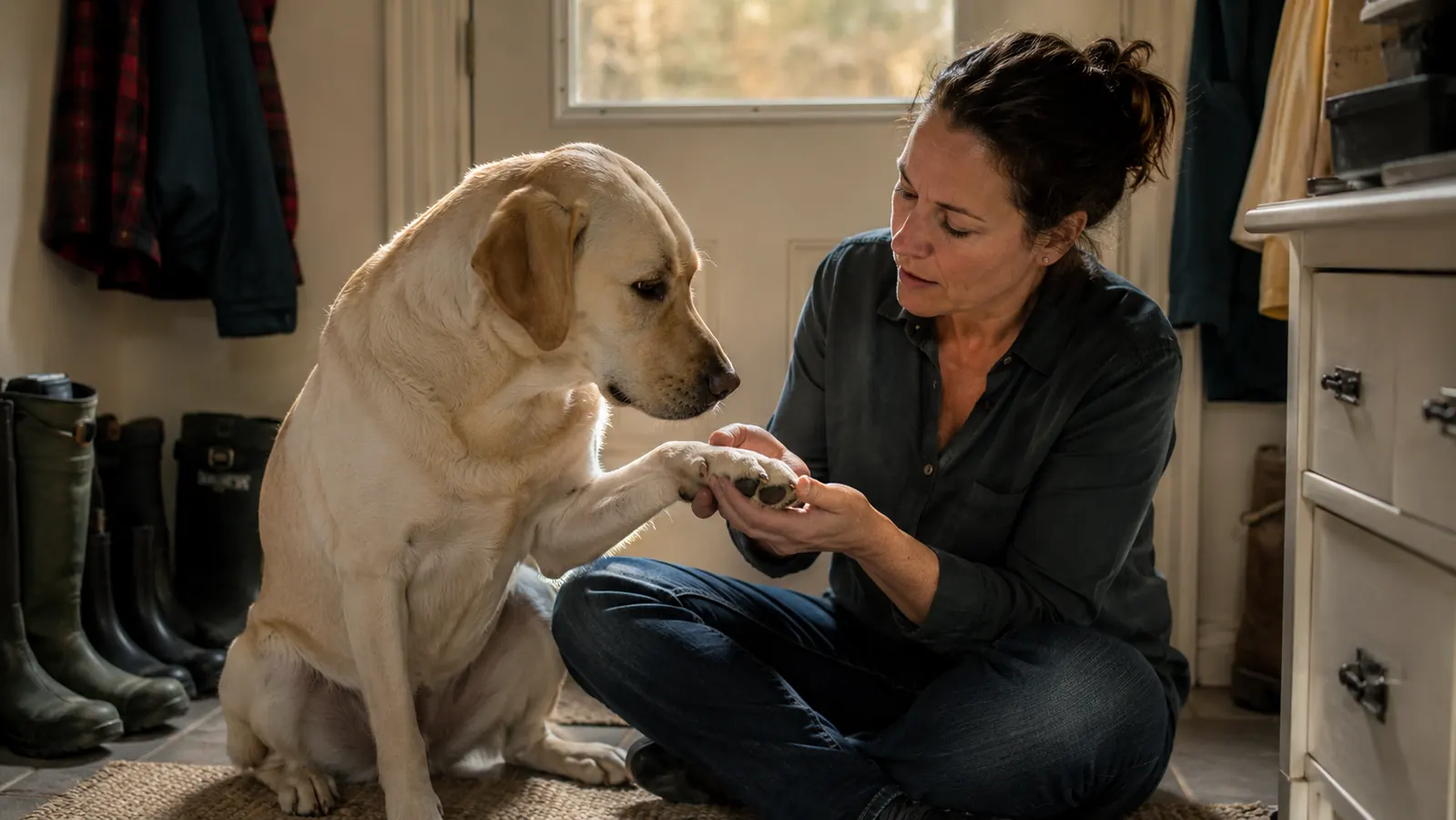
The first time I noticed Penny's pads looking rough was late November, about three weeks into our shift from trail runs to road runs. She's a two-year-old lab mix, around 52 pounds, and she logs between four and six miles most days. I work mornings, so we run before dawn, which means de-iced sidewalks and a lot of salt. By week three of winter running, the edges of her front pads were starting to crack, and she was spending more time licking her paws after walks than I was comfortable with. I'd used paw balms on clinic dogs as a vet tech, but I'd never tracked one product consistently on my own dog through a full seasonal cycle. That November is when I started with Musher's Secret, and I've applied it through three seasons now on two dogs with completely different usage patterns.
Otis, my 12-year-old beagle, is the other half of this review. He walks about a mile a day on a mix of grass and pavement, nothing strenuous. His pads have always been softer than Penny's and he does not cover nearly the mileage. Having both dogs in this experiment turned out to be useful because it showed me how the wax performs at opposite ends of the activity spectrum, on a working paw and on a senior dog who just needs baseline maintenance.
The Quick Verdict
The beeswax barrier holds up through serious seasonal stress on active paws, Penny's cracks healed inside two weeks, and the cadence is easy to build into a routine. It does not eliminate the need to rinse salt off after winter walks, and it is not a substitute for vet care if cracks are deep. But as a preventive and maintenance product, it has earned a spot in my coat closet year-round.
Amazon Check Today's Price →Penny's paws went from cracked edges in week three to fully smooth by week five. Check current pricing on Amazon.
Musher's Secret paw wax is lick-safe, beeswax-based, and formulated to protect against both salt and hot pavement. The 60g tin is more than enough for a full season of regular use on one dog.
Amazon Check Today's Price on Amazon →How I've Used It Across Three Seasons
My application method has not changed much since month one, but my cadence has. I started applying every other day in November, which felt excessive by February once I understood how the wax builds up in the pad over time. By January I had settled on a three-to-four day cadence for Penny during active winter running, and once a week for Otis throughout the year. The technique is simple: a pea-sized amount per paw, worked in with my thumb between the pads and across the main pad surface, then I let her stand on it for about thirty seconds before she goes anywhere. She figured out what the tin meant within two weeks and now holds her paw out when she sees me reach for the closet shelf.
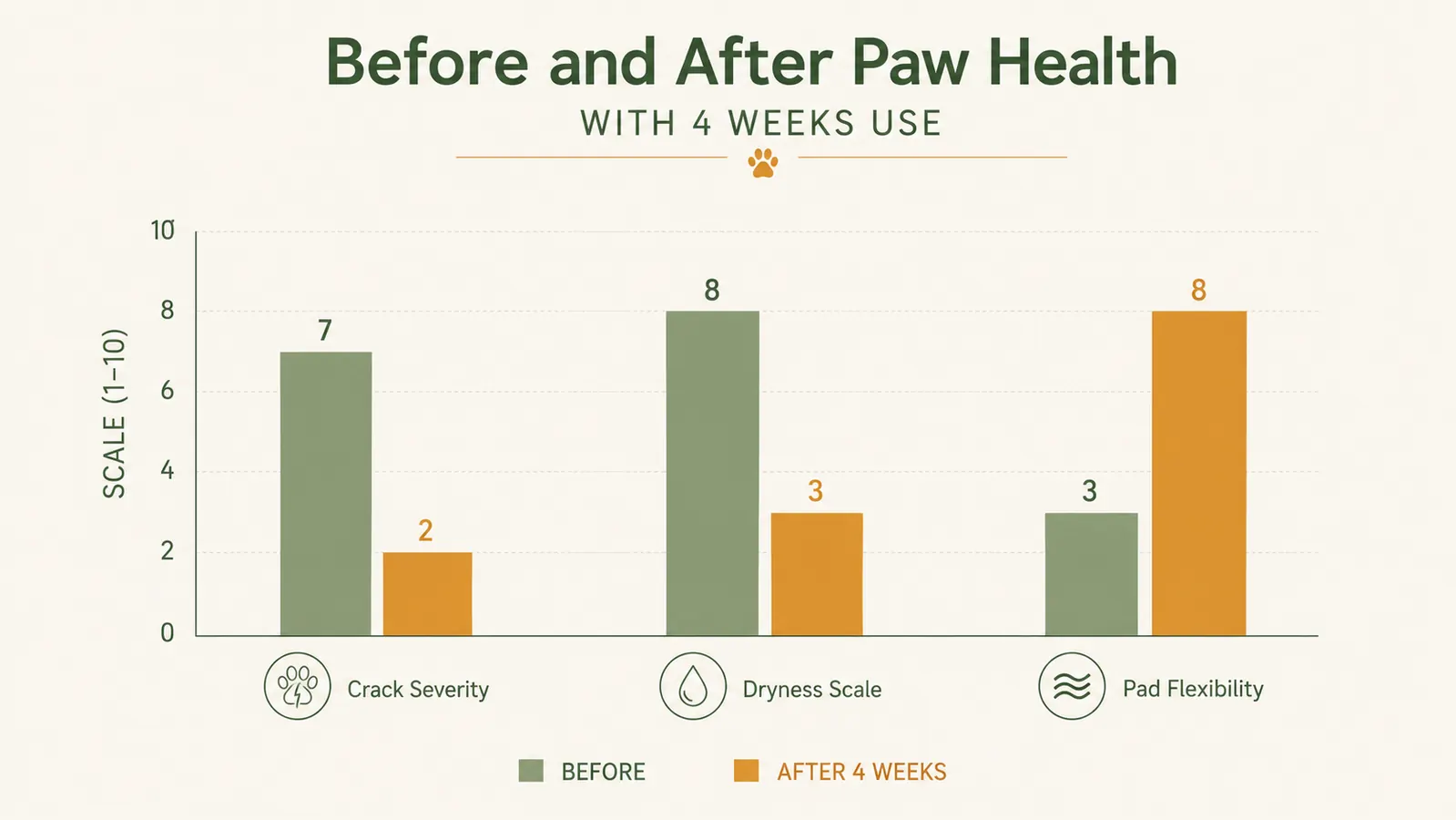
Winter was the real test. We have salt on the roads from mid-December through late February, and some nights I see the grit sitting in the seams of the concrete for the full half mile stretch from our house to the park. After applying Musher's Secret the evening before runs, I still rinse Penny's paws when we come inside, but I've noticed a clear difference in how her pads look and feel when I'm doing the rinse. Before the wax, the pad surface would feel slightly tacky and raw-looking in the cracked spots. With consistent application, the pad stayed supple and the cracks that had started forming in November closed and smoothed over by the second week of December.
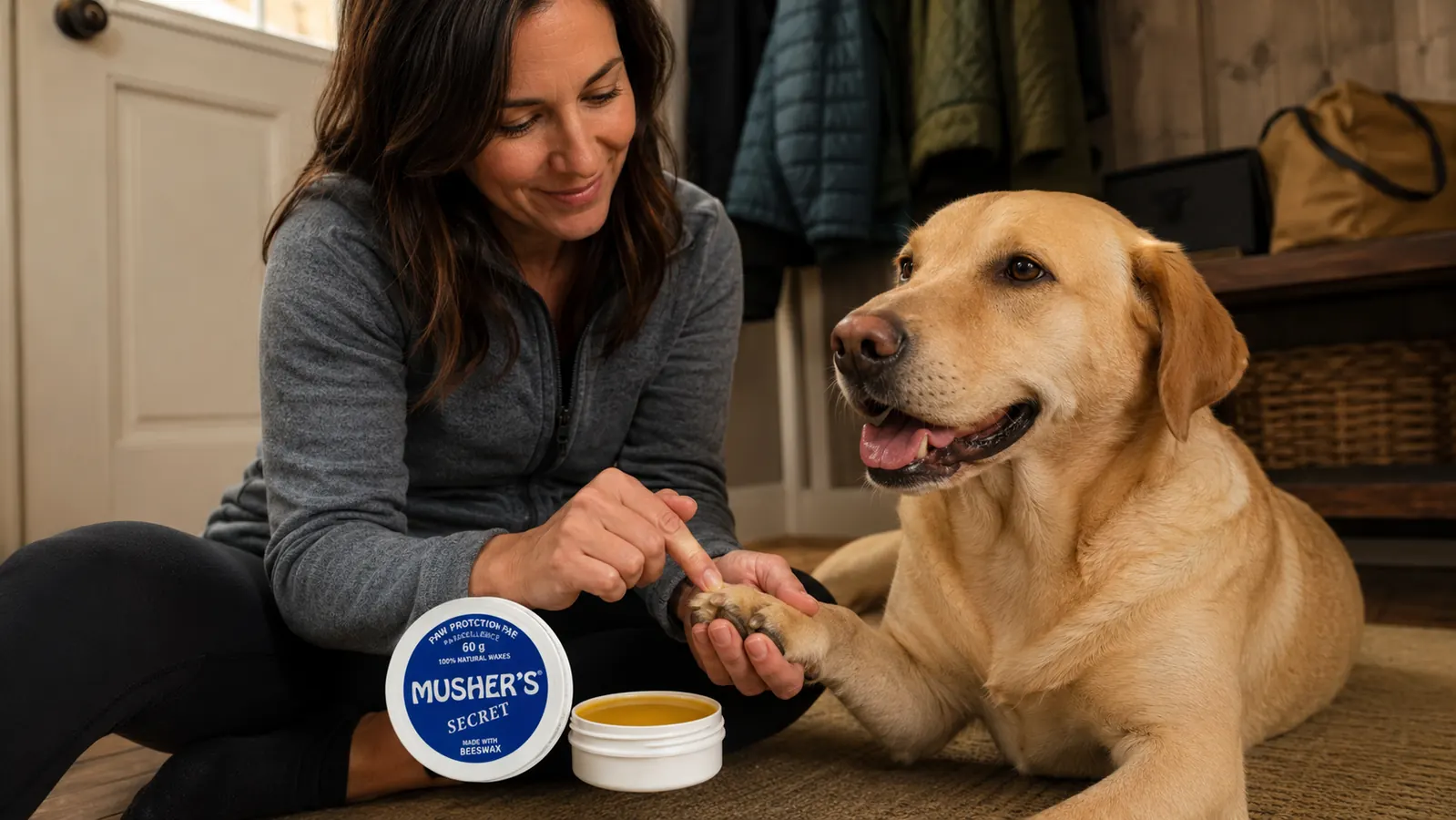
Spring was the easiest season because there was no extreme at play, just normal pavement, trail mix, and the occasional muddy path. I backed off to twice a week for Penny. Her pads looked the best they had looked since I started tracking them, and I credit that to having built a genuine wax barrier through winter rather than just spot-treating when things got bad. Otis needed nothing more than his once-a-week swipe.
Summer Hot Pavement: Where Paw Wax Actually Earns Its Keep
Hot pavement gets underestimated by a lot of dog owners because you cannot see a burn happening in real time. The general test is the back-of-the-hand rule: if the pavement is too hot to hold your hand on for seven seconds, it's too hot for unprotected paws. In July and August in our area, that window closes fast. On days over 85 degrees, Penny and I move our runs before seven in the morning, but even at that hour the asphalt holds heat from the night before, and the sidewalks along south-facing streets stay genuinely warm underfoot.
I increased the application cadence back to every other day in July, applying the evening before so the wax had a full night to absorb into the pad before morning contact. What I noticed over the summer was that Penny never developed the reddening or slight puffiness at the pad margins that I'd seen in previous summers before I was using any balm at all. She also licked her paws far less after walks, which I take as a signal that the pad surface wasn't irritated. I want to be clear: Musher's Secret is not a heat blocker in any absolute sense. If you walk your dog on blacktop at noon in midsummer, no wax is going to prevent a burn. The value in summer is maintaining a protective moisture layer so the pad doesn't dry, crack, and then contact a hot surface in an already-compromised state.
Before the wax, every winter I was treating cracks reactively. Musher's Secret flipped that into a prevention routine, and by spring Penny's pads looked better than they had at any point the previous year.
How the Beeswax Barrier Holds Up on High-Mileage Paws
Penny averages close to 35 miles a week. That's on pavement, packed trail, loose gravel, and the occasional creek crossing. The durability of a wax barrier on that level of use is a fair question. The honest answer is that the wax does not stay on the pad as a visible coating the way a lip balm would stay on your lips. It absorbs into the pad tissue over several hours, which is the right mechanism for a paw product. You're not trying to create a protective glaze that stays on the surface. You're trying to maintain the suppleness and integrity of the pad material so it resists cracking under friction and temperature stress.
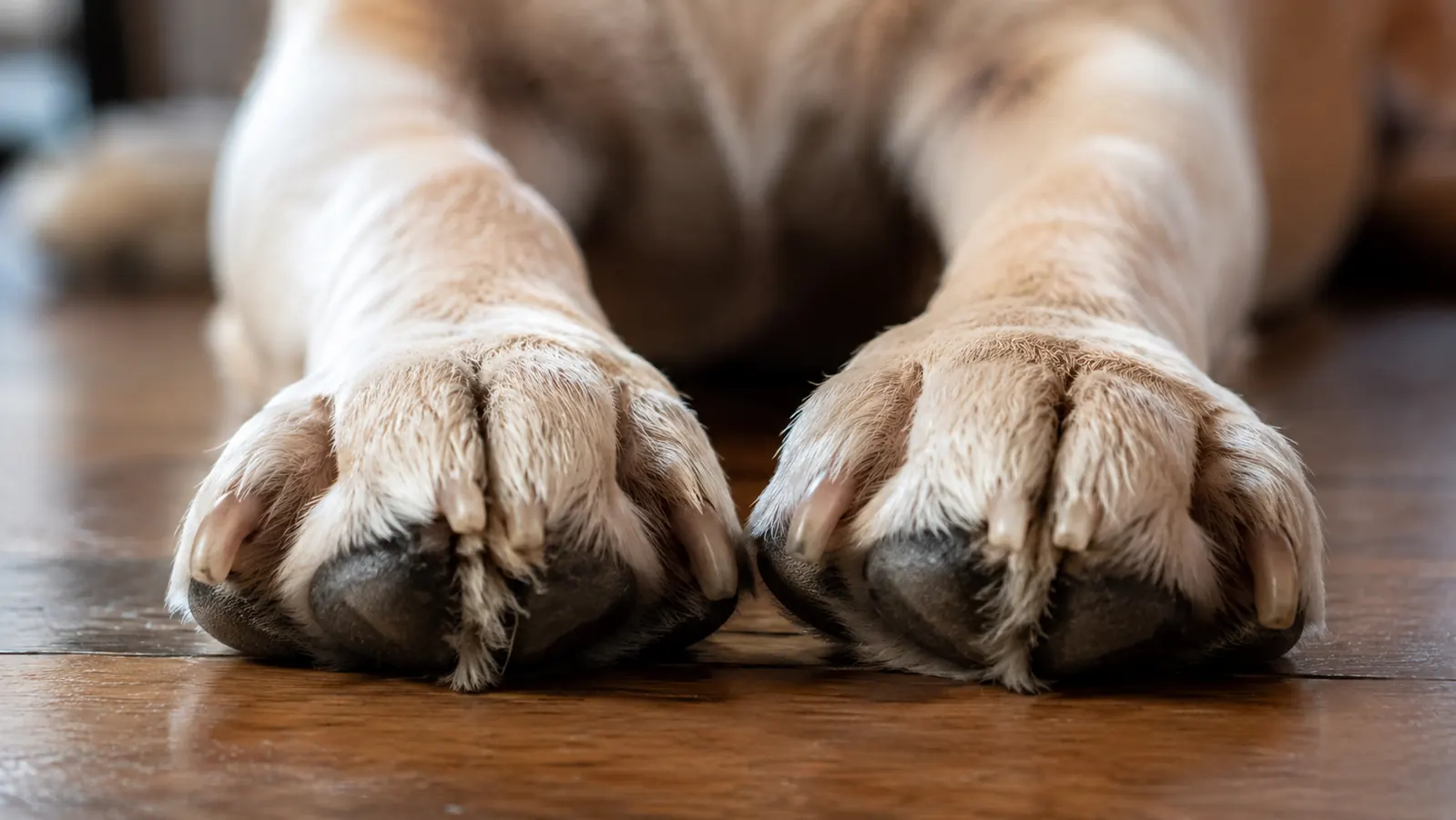
That framing is important because it changes what a realistic maintenance cadence looks like. If you apply once and expect the dog's paws to be protected for a week of hard running, you'll be disappointed. If you treat it like a skincare routine, two to four times a week depending on conditions and activity level, the results are consistent and cumulative. By month three of regular use, Penny's pad thickness at the margins had visibly improved. The tissue looked less fissured even under close inspection.
Winter Salt and Ice: The Specific Problem This Product Was Built For
Musher's Secret was originally developed for sled dogs running on snow and ice. That origin matters when you're thinking about whether it's appropriate for a pet dog walking on a salted sidewalk, because the answer is that it's been doing this job far longer than most paw balms on the market. The salt problem on suburban sidewalks is two-pronged. First, salt is hygroscopic, which means it pulls moisture out of whatever it contacts, including pad tissue. Second, the grit is abrasive and tends to collect in the seams between pads where it can act like sandpaper over the course of a walk.
The beeswax formula creates a layer that salt can't pull through as easily, and it reduces friction in the pad seams during gritty winter walks. I've tested this directly by checking Penny's paw seams after winter runs on days I'd applied wax the night before versus days I'd skipped. On skipped days, the seam tissue looked irritated and pinkish. On wax days, it looked normal. That's not a controlled experiment, but it's a pattern I saw consistently enough across a full winter to trust it.
One thing I want to flag specifically for senior dog owners using Otis as reference: older dogs often have drier, less elastic pad tissue to begin with, and salt irritation can escalate quickly into cracking in dogs that don't have the pad resilience of a younger dog. Otis at 12 has pads that look like they should after a decade of walks, slightly rougher and more textured than a young dog's, but the once-a-week Musher's application has kept them from getting dry enough to split. That has been the most meaningful outcome for him.

Application Cadence by Season: What I Actually Do
After three seasons, here is the cadence that has worked consistently for Penny at her activity level. Fall, once the temperature drops below 50 degrees on a regular basis: every two to three days. Winter with active salt exposure: every other day or at minimum three times a week, always applied the evening before the next day's run. Spring: twice a week. Summer above 85 degrees: back to every other day. For Otis, year-round once a week covers his needs. The 60g tin at this cadence lasts me roughly four months for both dogs combined. I've gone through three tins since I started.
The application itself takes under two minutes for both dogs. I do it in the evening, usually while they're calm and settled, which means no fidgeting and no wax on my floors from a dog who wants to run around immediately after. Penny has genuinely learned to tolerate it. Otis likes the attention. Neither dog has ever had a reaction, which is consistent with everything I know about this formulation from the clinic side.
What I Liked
- Cracked pad margins healed within two weeks of consistent use in winter conditions
- Beeswax formula is absorbed well by pad tissue; cumulative improvement visible over months
- Effective barrier against salt pull in winter and surface dryness in summer heat
- Maintenance cadence is realistic for active dogs at three to four times per week
- Senior dogs with naturally drier pads benefit noticeably from once-a-week baseline applications
- 60g tin is appropriately sized for a full season of use without waste
Where It Falls Short
- Not a substitute for rinsing salt off after winter walks; best used alongside a quick rinse, not instead of one
- Application needs to happen several hours before activity for the wax to absorb properly; last-minute application is less effective
- Requires consistent cadence to see results; sporadic use gives sporadic results
- Does not prevent heat burns on extreme summer pavement; temperature management is still required
Who This Is For
Musher's Secret is the right choice if you have an active dog who runs or hikes on pavement and trails year-round, or if you live somewhere with road salt in the winter. It is also worth using if you have a senior dog with naturally dry pad tissue who needs regular baseline maintenance to stay comfortable. The product rewards consistency. If you apply it routinely throughout a season rather than only when you notice a problem, you get cumulative improvement in pad quality that holds up even through high-mileage use. Dog owners who want a single paw product that addresses both cold-weather salt damage and warm-weather pavement dryness will get good mileage out of this one tin.
Who Should Skip It
If your dog spends most of its time on grass and indoor surfaces and you're looking for a quick fix for a single cracked pad, there are less expensive options worth trying first. Musher's Secret performs best as a maintenance product used on a schedule, not a spot treatment you pull out once. If your dog has deep cracks that are bleeding or showing signs of infection, that's a vet visit before a balm purchase. No topical wax will resolve an infected pad, and applying any barrier product to an open wound is something you should clear with your vet first. Finally, if you want a product that smells pleasant during application, this is not the most neutral-smelling option. The wax has a mild natural odor from the beeswax and oils that dissipates once absorbed, but it is noticeable in the few minutes right after you apply it.
Three seasons of daily use convinced me this is the only paw product I need for Penny. Here is today's price on Amazon.
Musher's Secret 60g is enough for a full season on one active dog, or four to five months on two dogs at maintenance cadence. The beeswax formula is lick-safe and handles both winter salt and summer pavement, which means one product does the job of two.
Amazon Check Today's Price on Amazon →