
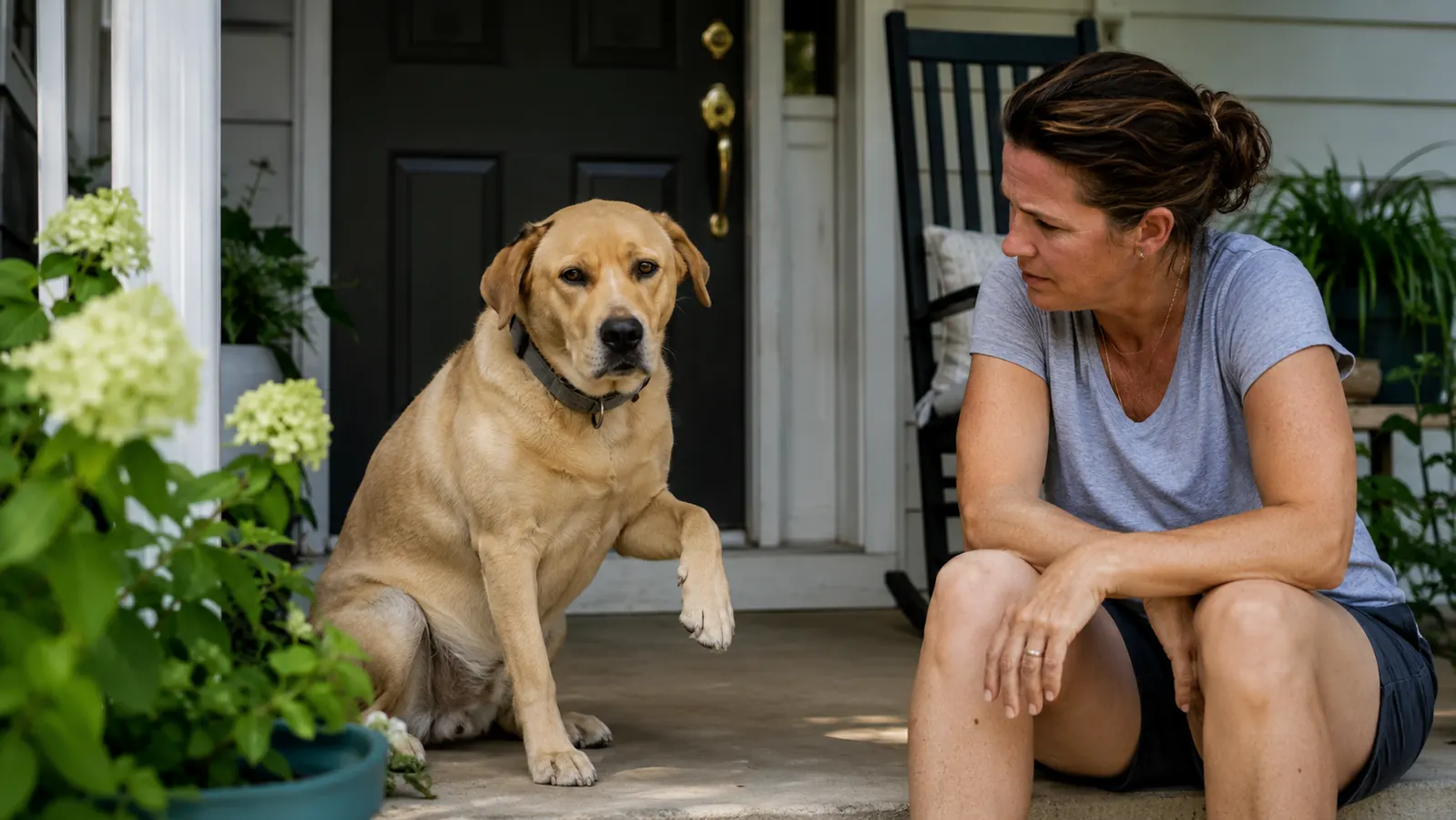
Paw pads are tougher than they look, but they are not invincible. I learned that the hard way with Penny, my two-year-old lab mix, during our first real summer in Florida. After a 20-minute walk on blacktop that registered 140 degrees Fahrenheit in July heat, she came home limping on three legs and spent two days licking her front right pad raw. I felt terrible. A jar of paw wax sitting on the counter beforehand would have prevented the whole thing.
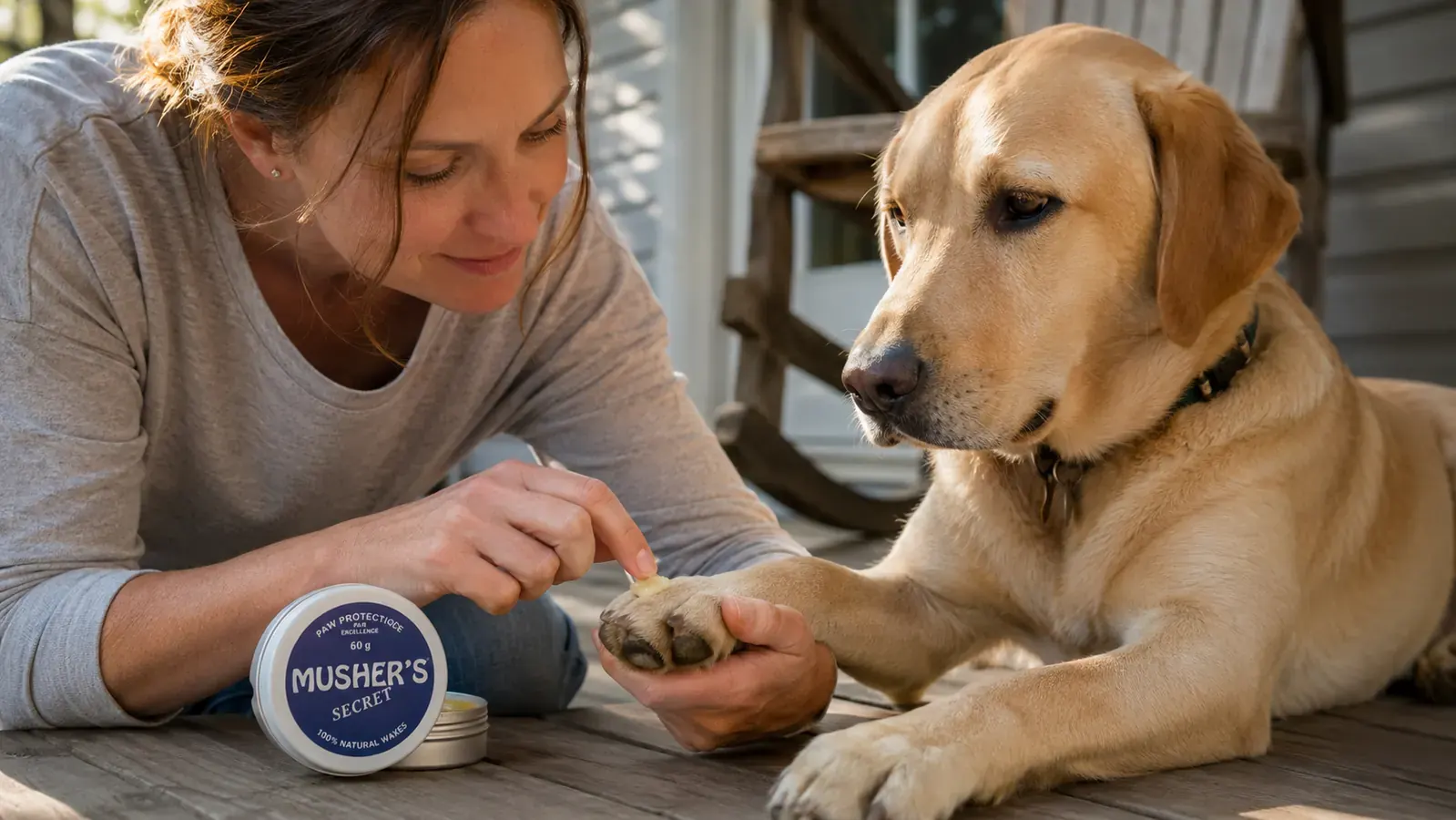
Since then, dog paw balm has been one of the items I never let run out, right alongside flea prevention and ear cleaner. Musher's Secret Dog Paw Wax is the one we use. It is a petroleum-free blend of food-grade waxes, vitamin E, and carnauba, and it forms a breathable barrier on the pad surface without making the floor slippery or leaving a greasy residue. It is also lick-safe, which matters because every dog on the planet immediately tries to lick whatever you put on their feet. Here are the 10 situations where that little tin earns its place in your cabinet.
Your dog's paws are walking on surfaces that would blister your bare feet. Musher's Secret is what we apply before every risky walk.
Musher's Secret Dog Paw Wax (60g) is a lick-safe, vitamin E-enriched paw wax used by sled dog mushers and now by everyday pet owners who want to protect their dogs year-round. Check today's price on Amazon.
Amazon Check Today's Price on Amazon →Scorching Summer Sidewalks
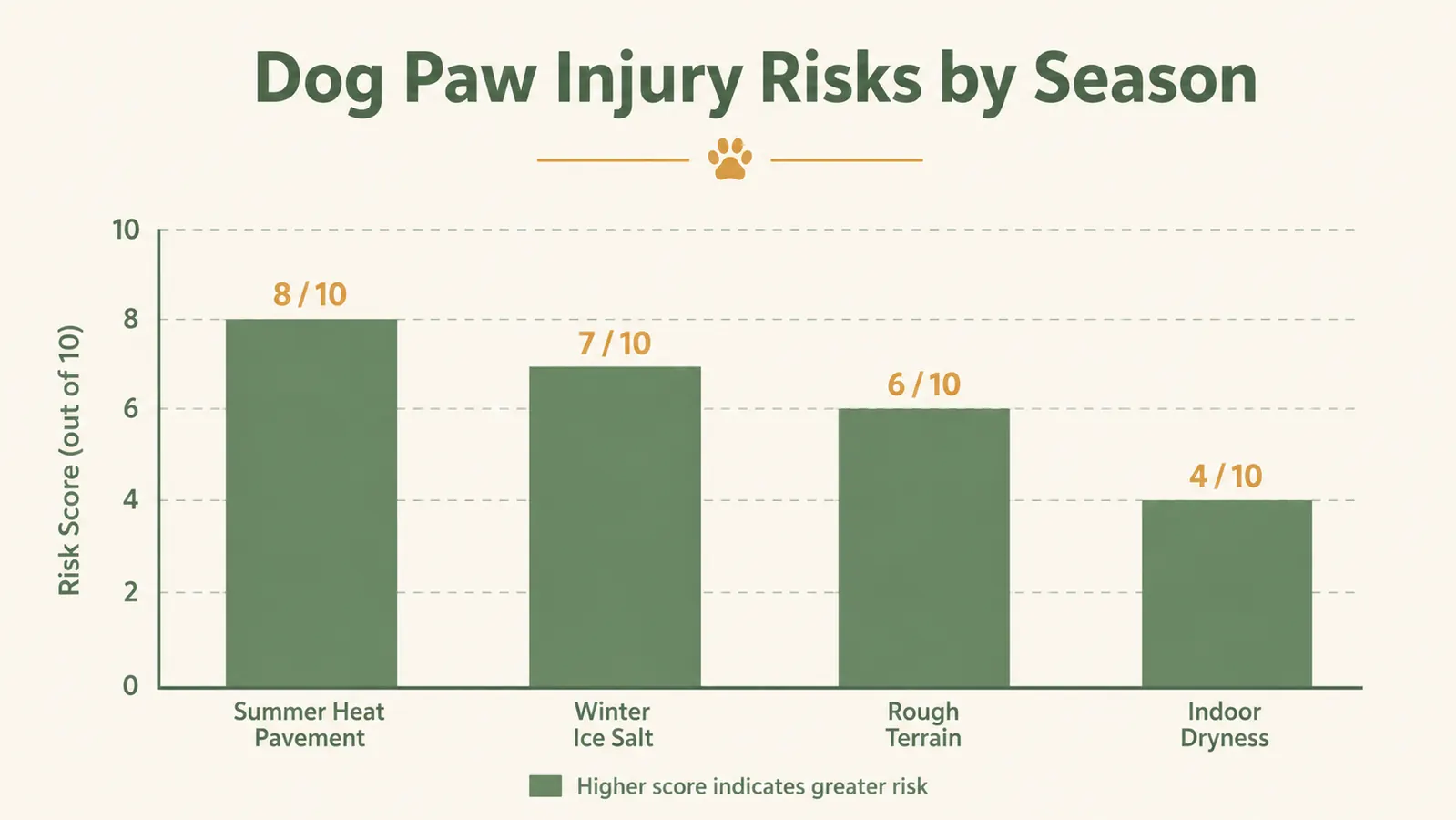
Asphalt absorbs and holds heat well past what a bare foot can tolerate. The five-second rule is a fair test: press your own palm flat on the pavement for five seconds. If you pull away, the surface is too hot for your dog to walk on without protection. Penny triggered a blister after roughly 15 minutes on dark blacktop in July heat. A thin coat of Musher's Secret paw wax applied before the walk creates a protective barrier that reduces direct surface-to-pad heat transfer and keeps the pad from getting abraded by dry concrete. It does not make summer blacktop safe at peak heat, nothing does, but it gives you a margin when you cannot avoid pavement entirely.
Winter Ice-Melt Salt
Sodium chloride and calcium chloride are the two most common ice-melt compounds, and both are hard on paw pads. Salt pulls moisture out of the pad tissue, causing cracking, and the sharp granule edges physically abrade the skin between the toes. I watched Otis lift each foot in sequence on a salted sidewalk last February, which is his signal that something is wrong. The fix is twofold: Musher's Secret paw balm before the walk to seal the pad surface against salt absorption, then a quick rinse with lukewarm water after to remove any granules that worked into the paw webbing. The wax reduces how much salt contacts the skin in the first place.
Rough Hiking Trails
Trail surfaces that mix gravel, exposed root edges, and dry packed dirt are fine for short hikes but start causing pad wear on anything over four miles. Penny is a high-energy dog and I take her on serious trails. Her pads are thicker than Otis's from regular use, but even hers came home raw-looking after a seven-mile ridge trail with a lot of exposed shale. Musher's Secret does not make pads invulnerable, but it does reduce friction enough to matter on longer outings. I apply it before a hike of three miles or more and carry the tin in my pack for a mid-trail reapplication if we are going six-plus.
Sandy Beaches
Sand sounds soft, but beach sand above the waterline gets extremely hot in summer and has an abrasive quality that is closer to fine sandpaper than a pillow. Wet sand near the water is fine. Dry white sand in the sun is not. Dogs also spend a lot of beach time digging, which grinds sand crystals into the webbing between the toes. Paw wax applied before the beach outing keeps that zone from drying out and cracking. After the beach, rinse the paws with fresh water and check between each toe for any sand that is impacted into a fold of skin.
Dry Cracked Pads
If your dog's pads look like the heel of someone who has not used lotion in a year, that dryness is not cosmetic. Cracked pads can split open, bleed, and become a vector for bacterial infection. The most common causes are low humidity indoors in winter (forced-air heating is brutal), too much time on hot dry surfaces without moisture replenishment, and age-related changes in skin elasticity. Otis is 12 and his pads crack every winter without intervention. Two applications of Musher's Secret paw balm per day, morning and evening, heals minor cracks within four to five days in my experience. Deep splits that are already bleeding need a vet visit before you add any topical.
Snow Balling Between the Toes
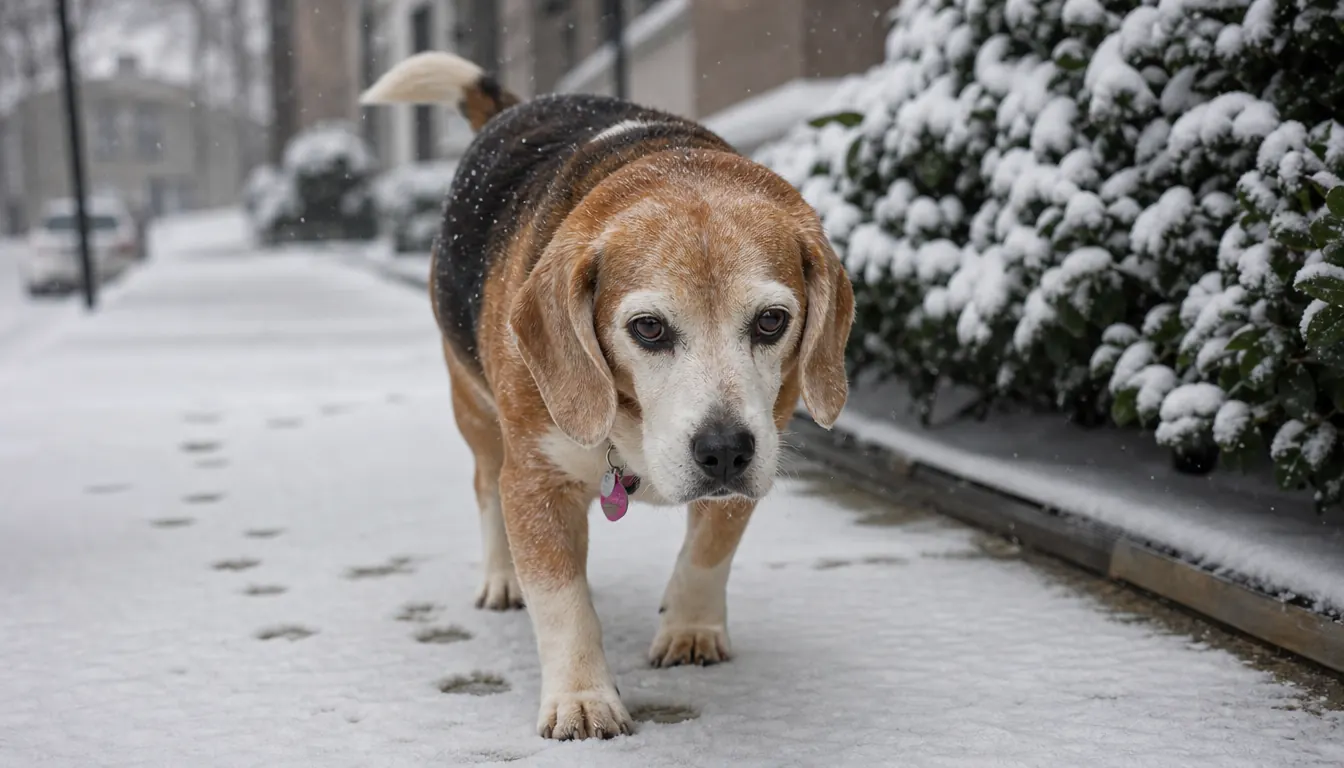
This one frustrates a lot of dog owners who cannot figure out why their dog keeps stopping on winter walks. Wet snow packs into the hair between the toes and compresses into ice balls that press painfully against the skin. Dogs with longer fur between their toes are especially prone to it. The solution most people reach for is booties, which work but which many dogs refuse to wear. The other option is a coat of Musher's Secret paw wax on the pads and between the toes before the walk. The waxy surface makes it much harder for snow crystals to stick and compact. It does not eliminate snowballing entirely in heavy wet snow, but it dramatically reduces how quickly the balls form.
Ice Fishing Trips and Deep Snow Days
Extended time in sub-freezing temperatures is hard on any exposed tissue, and paw pads are no different. Dogs who spend hours on frozen lakes, in deep powder, or on cold packed ice can develop frostnip on the pad edges and between the toes before you notice any behavioral sign of distress. A good paw wax does two things in this scenario: it reduces direct contact between the pad and the cold surface, and it keeps the pad tissue from drying out in cold dry air, which accelerates cracking. I apply Musher's Secret before any outing where we are going to be outside for more than 45 minutes in temperatures below 20 degrees Fahrenheit.
Rocky Scrambles and Boulder Fields
Scrambling over exposed rock faces is a different texture challenge than packed trail. The surface is hard with no give, the edges are angular, and any scramble that requires paw-over-paw climbing movements puts serious lateral shear stress on the pad skin. Even well-conditioned dogs can come away from a rock scramble with small abrasions on the outer edge of the pad or at the junction between the main pad and the smaller digital pads. Applying Musher's Secret paw balm the evening before a scramble-heavy day lets the wax penetrate overnight so the pad is conditioned before it takes impact, rather than trying to apply a surface barrier right before you head out.
Hot Sand at the Dog Park
Inland dog parks with sand or decomposed granite surfaces are a different beast from beach sand, and often hotter because they are surrounded by fencing and retain heat without ocean breeze. The same July afternoon that would make a grassy park comfortable can make a sand-surfaced dog park dangerous to run on for 30-plus minutes. If your park uses sand and it is above 85 degrees outside, apply paw wax before the visit and plan to cut the session short or find a shaded area with grass for breaks. Musher's Secret helps, but shade and water breaks do the heavier lifting in genuine heat.
Abrasive Concrete on Daily Walks
This is the least dramatic item on the list but probably the most relevant for most dog owners. Daily walks on city sidewalks or rough concrete are a slow grind on pad health. The pads do toughen with regular walking, but that toughening happens unevenly, and any break in the routine, a week of rain where you shortened walks, a vacation where they barely walked, means the pads soften and then get hit full-force again. Applying Musher's Secret two or three times a week as maintenance keeps pad skin pliable and resistant rather than dry and prone to cracking at the edges. It takes 30 seconds. For Otis in particular, skipping that routine for two weeks shows up as visible dryness along the pad margins.
What I'd Skip
Coconut oil is the most common DIY substitute, and I understand why people reach for it: it is cheap, kitchen-accessible, and widely recommended in Facebook pet groups. The problem is that it absorbs so quickly that there is almost no surface barrier effect left by the time your dog takes 20 steps. It is fine as a quick moisturizer for already-cracked pads at home, but it is not a substitute for a wax-based product when you need actual protection during a walk. Petroleum jelly has the opposite problem: it creates a surface barrier but it is not breathable, it picks up dirt and debris aggressively, and it transfers to floors and furniture. If you are going to buy something, buy something formulated specifically for this purpose. The price difference between a jar of Musher's Secret and a year of coconut oil applications is negligible when you factor in what it saves in vet bills for pad injuries.
Two applications of Musher's Secret paw wax per day healed Otis's winter cracks in four days. Coconut oil over the same stretch did nothing for the deep ones.
36,000 reviewers have figured this out. A tin of Musher's Secret paw wax is a year-round tool, not a seasonal one.
Musher's Secret Dog Paw Wax protects against heat, cold, salt, rough terrain, and dry air in a single lick-safe formula. It is the paw balm we keep on the counter, not buried in a cabinet. Check the current price on Amazon and see why it has a 4.6-star rating across more than 36,000 reviews.
Amazon Check Today's Price on Amazon →