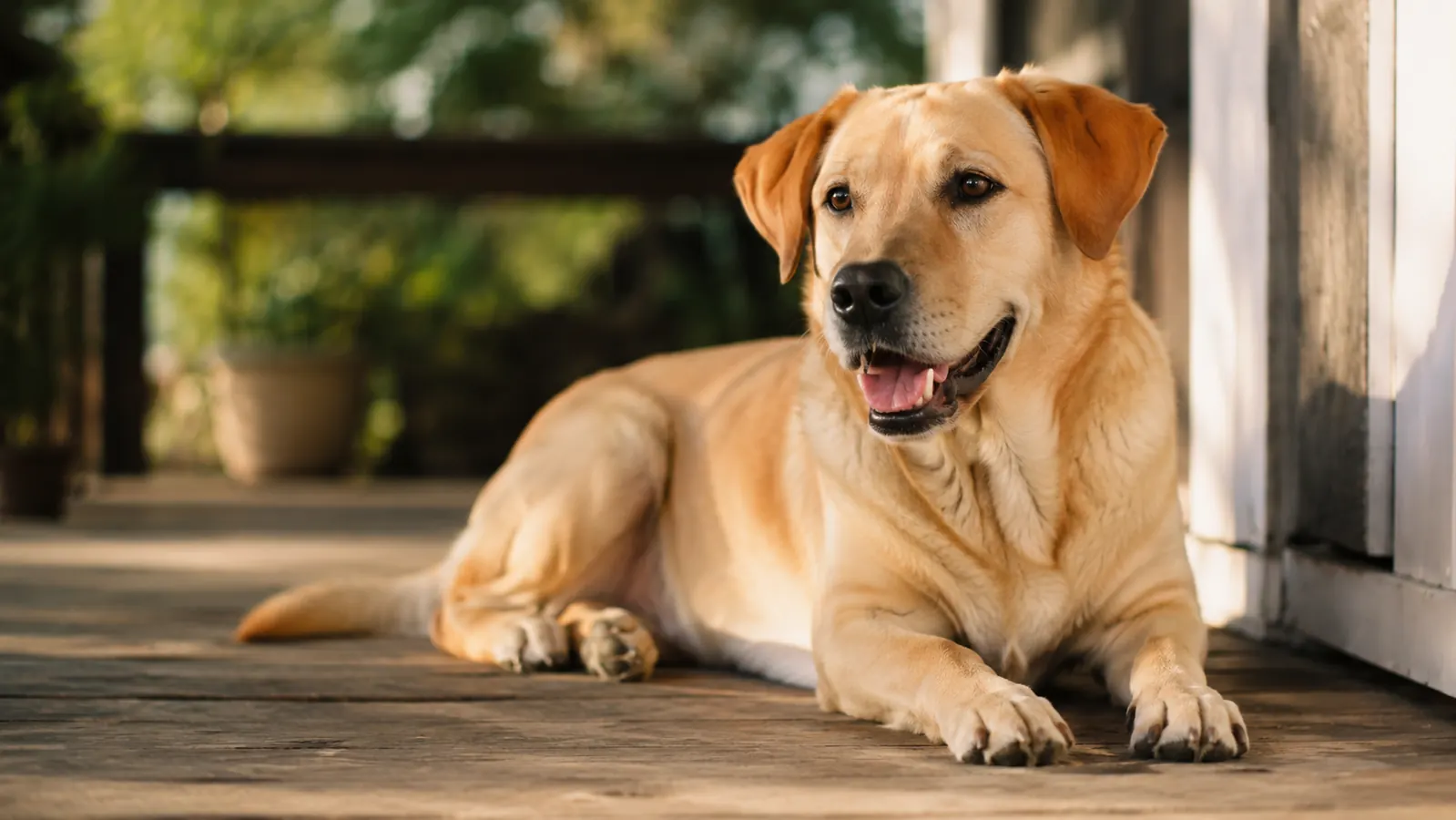
Penny is a three-year-old lab mix with a lot of opinions and absolutely no concept of when enough trail miles is enough. From May through August we put in four or five long hikes a week, plus daily neighborhood runs on concrete. By the middle of July I noticed she had started licking at her front paws in the evening, which is not something she normally does. I flipped her over and checked, and what I saw stopped me. Her pads, which should have been smooth and firm, were rough and dry like cracked leather. The outer edges had small fissures I could feel with my thumbnail. Nothing was bleeding, and she was not limping, but she was clearly bothered. The tin of Musher's Secret paw wax that now lives by our back door is the reason her pads went from cracked and raw back to healthy, and here is exactly how that happened.
I spent a few years as a vet tech before I switched to writing full time, so I know what a paw pad problem can escalate into if you ignore it. Rough, dry pads lose their protective layer gradually. Once the surface cracks deeply enough to bleed, you are dealing with open wounds on a body part that contacts every surface the dog walks on. That is harder to treat, more uncomfortable for the dog, and often means a vet visit and a round of antibiotics. I was not going to let it get there. But I also knew that for surface-level dryness and minor cracking, what Penny needed was not medication. She needed a consistent barrier balm that would lock moisture in and protect the pad surface on every walk.
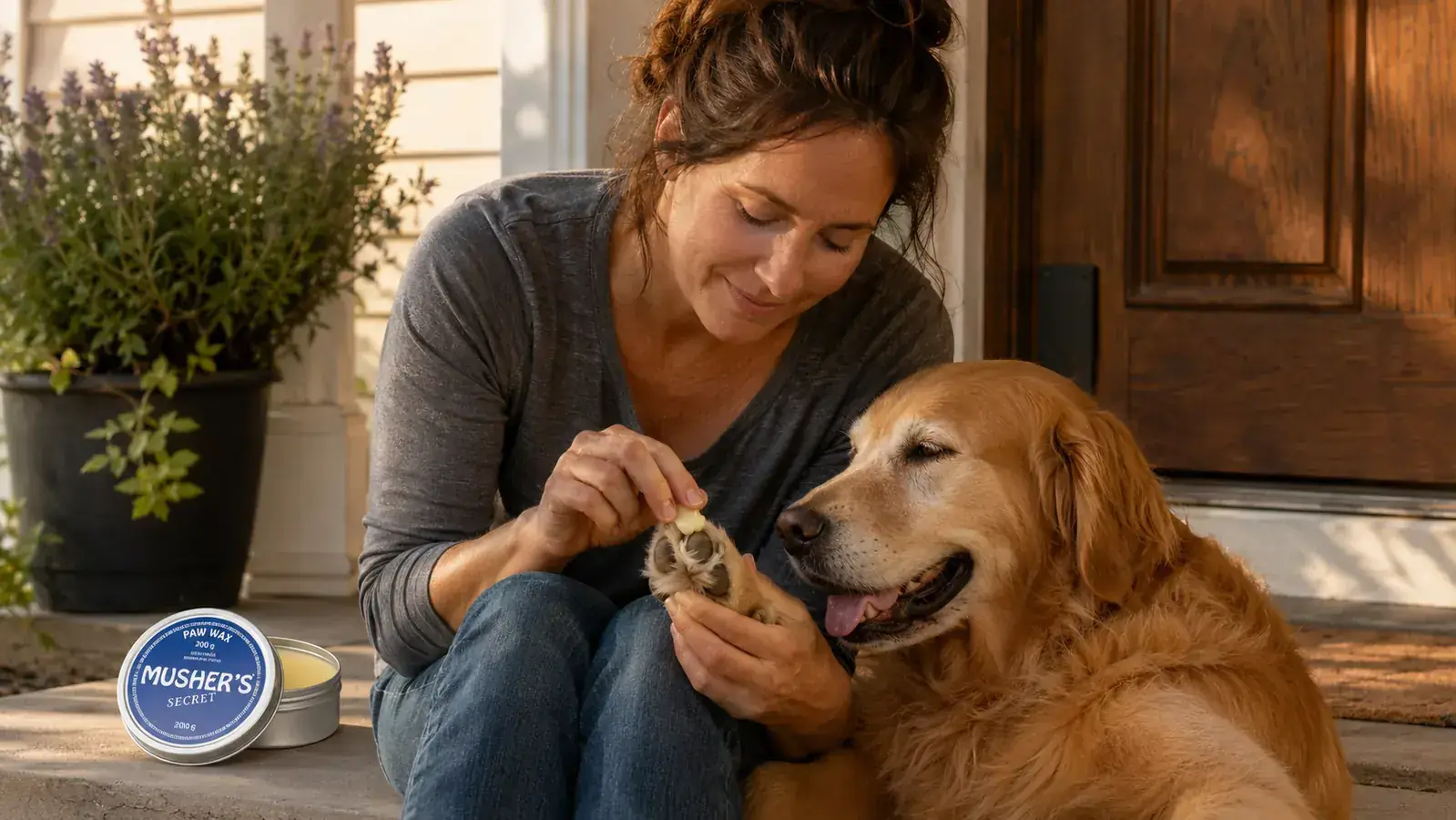
I had seen Musher's Secret mentioned in a handful of conversations among working-dog owners. The 60-gram tin is formulated as a protective wax rather than a cosmetic moisturizer. The idea is that it forms a semi-permeable barrier on the pad surface, sealing in the pad's own natural moisture while shielding it from abrasive surfaces and heat. It contains white petroleum, white and yellow beeswax, carnauba wax, and vitamin E. The vitamin E is the only active healing ingredient; everything else is barrier. That is an honest, straightforward formulation and it matched exactly what I was trying to accomplish for Penny.
The first time I applied it, Penny gave me a long look of skepticism and then sat remarkably still. You warm a small amount between your fingers and press it into each pad. It goes on like a thin layer of chapstick, slightly waxy, not greasy. It absorbs quickly enough that within about a minute the paws are no longer slick. Penny sniffed her foot, licked once, did not make a face, and walked off. The tin says it is lick-safe, and from what I could observe she was not actively seeking it out, just doing a casual inspection. I did the routine every night before bed for two weeks, and then every other night after that.
Important note before I go further: if your dog is actively limping, if the pads are bleeding, or if the cracks are deep enough that you cannot see the bottom, that is a vet call, not a home remedy situation. Musher's Secret is a maintenance and prevention tool. It is not going to close an infected wound or heal something that has gone past surface damage. I want to be clear about that because I have seen well-meaning owners try to wax over a pad that needed veterinary treatment, and that just delays the right help.
After two weeks of nightly application, the rough edges had softened noticeably. After four weeks, her pads felt the way they had in the spring, before the heavy trail miles started.
Penny's pads are healthy again. The tin that got us there costs less than a co-pay.
Musher's Secret 60g paw wax is what I reached for when Penny's pads started cracking after summer trail runs. One tin lasts months on a single dog with nightly use. Check the current price on Amazon.
Amazon Check Today's Price on Amazon →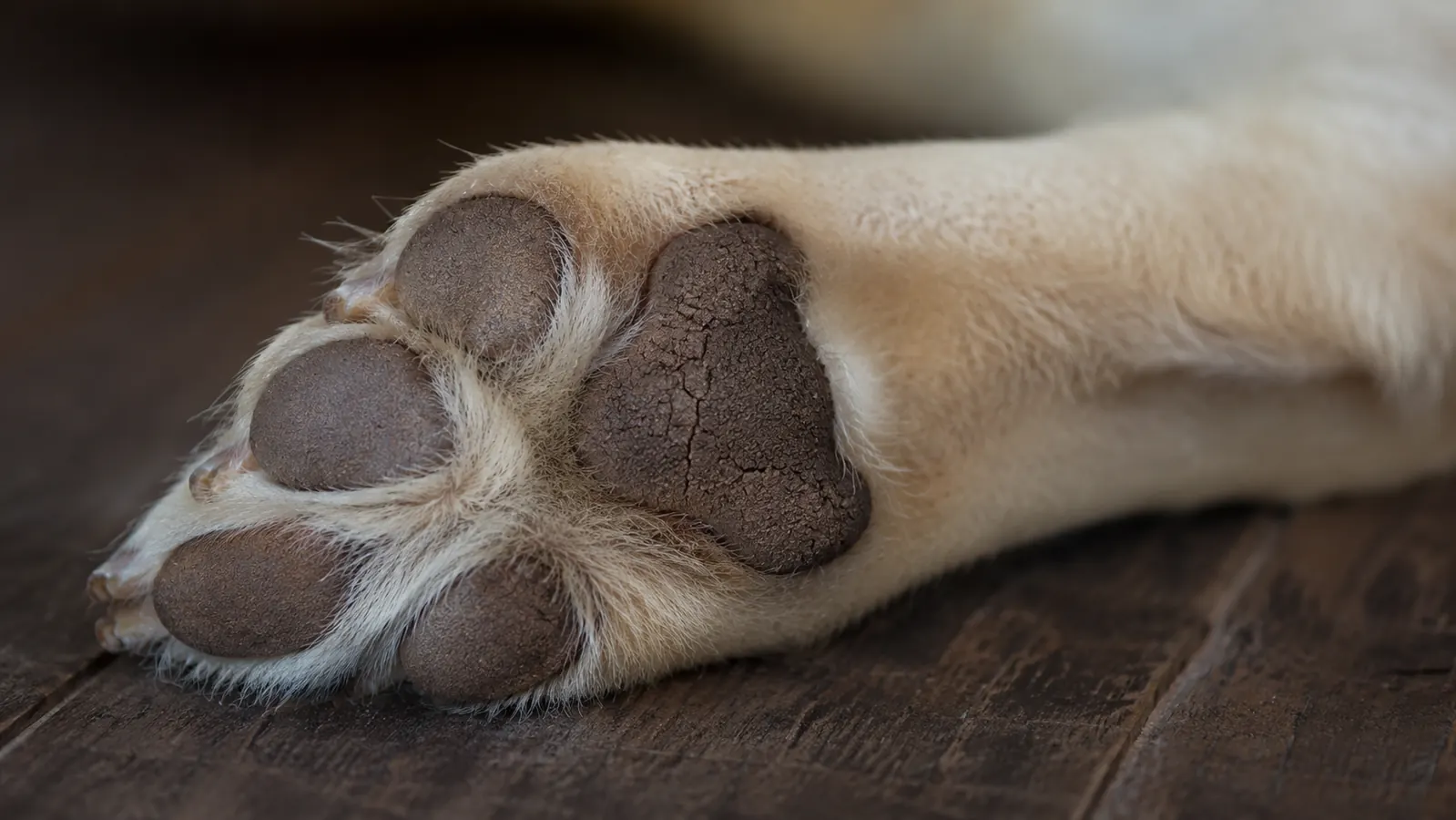
By the end of the first week I noticed Penny had stopped licking her paws in the evening. That was the first real signal that the wax was doing something useful. The licking had been her telling me something was irritating her. Once that stopped I knew the barrier was working. I kept up the routine even after she stopped showing discomfort, because that is the point of a preventive product. You do not want to quit the moment symptoms go away and then have the pads dry back out.
After two weeks, the rough outer edges of her pads had softened noticeably. They were not fully smooth yet, but they had lost that dry, papery texture that crumbles at the edges. After four weeks of consistent application, her pads felt the way they had in the spring, before the heavy trail miles started. Smooth, firm, and with no visible cracking. I had not changed anything else, same diet, same exercise schedule, same rinse-after-walk routine. The only variable was the nightly wax.
The 60-gram tin is small enough to fit in a jacket pocket, which matters because on longer day hikes I will sometimes apply a light coat before we start on particularly rocky stretches. It goes on fast enough that Penny barely breaks her sit-stay. I have also started using a thin layer on Otis, my senior beagle, before winter walks when the sidewalks get salted. His pads are older and drier to begin with, and the wax seems to keep the salt from working into any small cracks. I am not claiming it is a miracle for him, but it is a reasonable addition to his cold-weather routine.
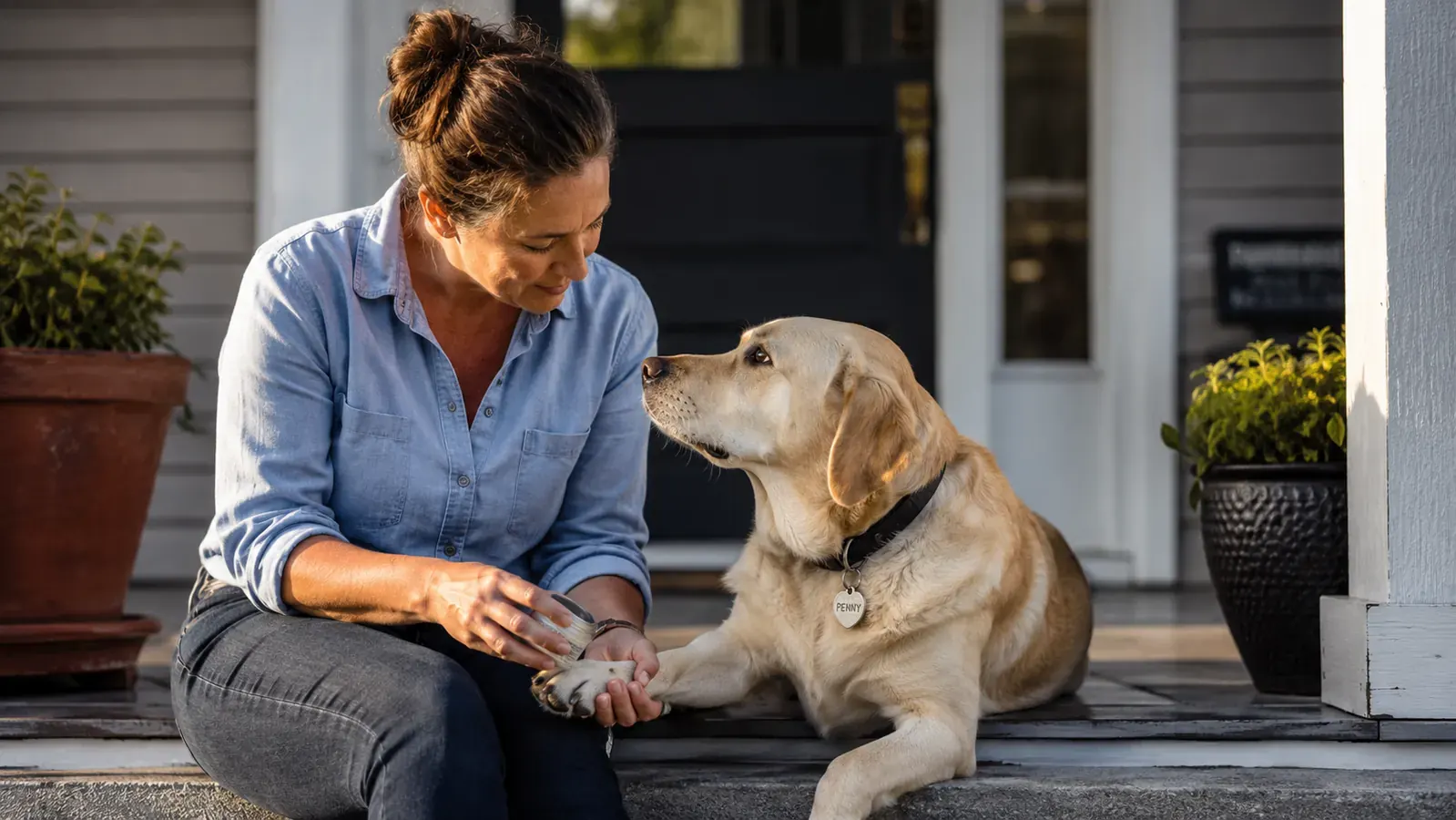
The one thing I will say about consistency is that it matters more than how much you apply. A small, thin coat every night beats a heavy application twice a week. Paw pads lose moisture constantly through normal activity and heat exposure. The wax layer needs to be refreshed regularly to stay effective. If you apply it once, see some improvement, and then stop, you will likely see the dryness return. This is a routine product, not a one-time fix.
Miso, my long-haired cat, has zero interest in being part of this experiment. Cat pads are a different situation anyway and she would remove a hand before letting anyone wax her paws. But Penny has accepted it as part of the bedtime routine with the sort of patient resignation that good dogs bring to things they tolerate for the sake of the relationship.
What I'd Tell You If We Were Sitting at My Kitchen Table
If your dog's pads are just starting to look rough and dry, and they are not bleeding or causing a limp, a consistent paw wax routine is worth trying before anything else. Musher's Secret is what I use and what I can speak to from actual experience with Penny. Start with every night for two weeks. Warm a pea-sized amount between your fingers, press it into each pad, and let it sit. Do it right before bed so there is less chance of it being licked off on walks. Give it a full month before you decide whether it is working. Pad skin turns over slowly. You will not see change in three days. But if you stick with it, the difference at week four is real. And if things are worse than surface dryness, if the cracks are deep or the dog is clearly in pain, skip the home remedy and call your vet. That is not a criticism of any product. It is just the honest line between what a balm can handle and what it cannot.
One small tin, a nightly two-minute routine, and Penny's pads are back to healthy.
Musher's Secret 60g is what I keep on the kitchen counter next to the leash hooks. Lick-safe formula, easy application, and it lasts months with daily use on one or two dogs. See the current price and reviews on Amazon.
Amazon Check Today's Price on Amazon →