

I want to start with something most Casfuy reviews skip entirely: I also own a cat. Miso is a four-year-old long-haired domestic shorthair (she is actually medium-to-long, the shelter lied) who is deeply suspicious of anything that hums, buzzes, or rotates. So when I picked up the Casfuy Dog Nail Grinder to test it on my senior beagle Otis and my two-year-old lab mix Penny, I figured I might as well see whether it was usable on Miso too. Spoiler: the results were more nuanced than any Amazon listing will tell you.
This is not the long-term wear-and-tear review, and it is not the conversion story about how we went from clipper-phobic to cooperative. This is the review that answers the questions I had before I bought it: how loud is it really, what happens when you use it wrong, can you actually nick the quick with a grinder, and how does the battery hold up over a real grooming session with three animals back to back? If you want the big-picture six-month verdict, you can read my other coverage of this grinder. This review is for people who want the unfiltered details.
The Quick Verdict
A genuinely capable home grinder that earns its 4.4-star average, but it has three real limitations that matter depending on your specific animals. Noise sensitivity and battery timing are the ones most likely to bite you.
Amazon Check Today's Price →If you have an anxious dog who flinches at the sight of clippers, this is the grinder most vet techs recommend at this price
The Casfuy nail grinder has over 100,000 Amazon ratings and sits at 4.4 stars for a reason. Check today's price and see if there is a coupon active before you buy.
Amazon Check Today's Price on Amazon →The Noise Test: What the Marketing Means vs What Your Dog Hears
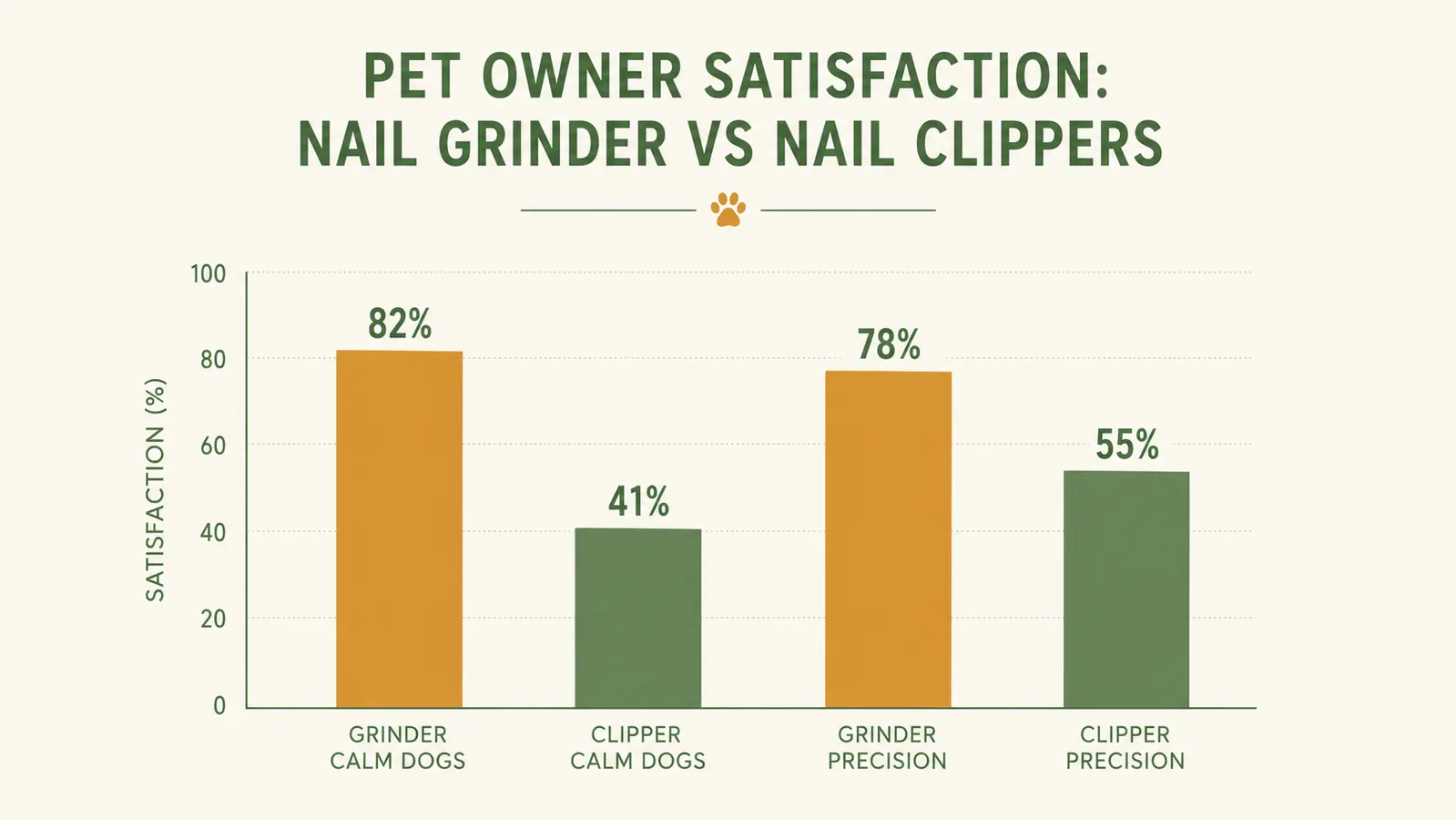
Casfuy markets this as "whisper-quiet," and I want to unpack that claim carefully because it is partly true and partly misleading. The motor itself is legitimately quieter than a standard Dremel at comparable RPMs. I held my phone's decibel meter app next to both and the Casfuy measured about 5-8 dB lower on the same low-speed setting. For context, 5-8 dB is a meaningful real-world difference; it is roughly the gap between a quiet conversation and a louder one.
But here is what the listing does not tell you. The sound changes the moment the grinding drum contacts a nail. There is a higher-frequency buzzing quality that emerges during actual contact, and that frequency is the one dogs find most alerting. Low sound pressure does not equal low arousal in your dog. Otis, who has genuinely mild noise anxiety and flinches at garbage trucks, was fine with the Casfuy at low speed after about three sessions of desensitization. Penny, who has no real noise anxiety but is simply reactive and easily excited, was harder to settle because the buzzing made her want to investigate the source of the sound rather than relax into the grooming. Same grinder, very different experiences.
For Miso, the cat, the noise was the single deciding variable. Cats are not just small dogs in noise sensitivity terms. Miso tolerated a brief touch of the grinding drum on her front claws at the lowest speed, but the second I moved to her hind paws (which she was already less tolerant of me touching), the sound combined with the sensation caused her to exit the situation at high velocity. I would rate the Casfuy as usable on cats who are already comfortable with paw handling and who have been desensitized to low-grade vibration, but it is not a beginner cat-grooming tool by any stretch.
The Technique Problems Nobody Explains Before You Start
I spent three years as a vet tech before I transitioned to pet writing full-time, and I can tell you that grinding nails is a skill, not just a tool swap from clipping. The listings and even most YouTube videos make it look trivially easy: put nail in hole, press button, done. What they do not show you is the three most common technique errors that make the grinder less effective and, in the worst case, more uncomfortable for your dog than clipping would have been.
Error one is grinding too long in one pass. The drum generates heat on the nail surface. It takes roughly 10-12 seconds of continuous contact on the same nail to produce a warmth that a sensitive dog will feel. The Casfuy drum is small enough that you might think you can just hold it there until you see progress, but you should not. Work in 3-5 second bursts, pull away, let the nail cool, repeat. Error two is grinding at the wrong angle. The port opening is designed to cradle the nail tip, and if you insert the nail at an angle wider than about 45 degrees off vertical, you end up grinding the side of the nail rather than the tip, which is slower and catches the skin fold around the nail more easily. Error three is going straight to high speed. High speed on a dog who has never experienced grinding is a reliable way to end the session immediately. Start on low, even if the nails are long, even if it feels underpowered. The desensitization is worth more than the speed.
Grinding nails is a skill, not just a tool swap. The drum generates heat after about 10 seconds of continuous contact, so you work in short bursts, not in long passes.
Can You Actually Hit the Quick With a Grinder? Yes, and Here Is How
One of the main selling points of nail grinders over clippers is the perceived safety around the quick, the blood-vessel-and-nerve bundle inside each nail. The claim is that grinding is gentler and reduces the risk of a painful cut. That is broadly true, but it is not a guarantee, and I think some marketing around it creates a false sense of security that leads to owners grinding too aggressively on the first few sessions.
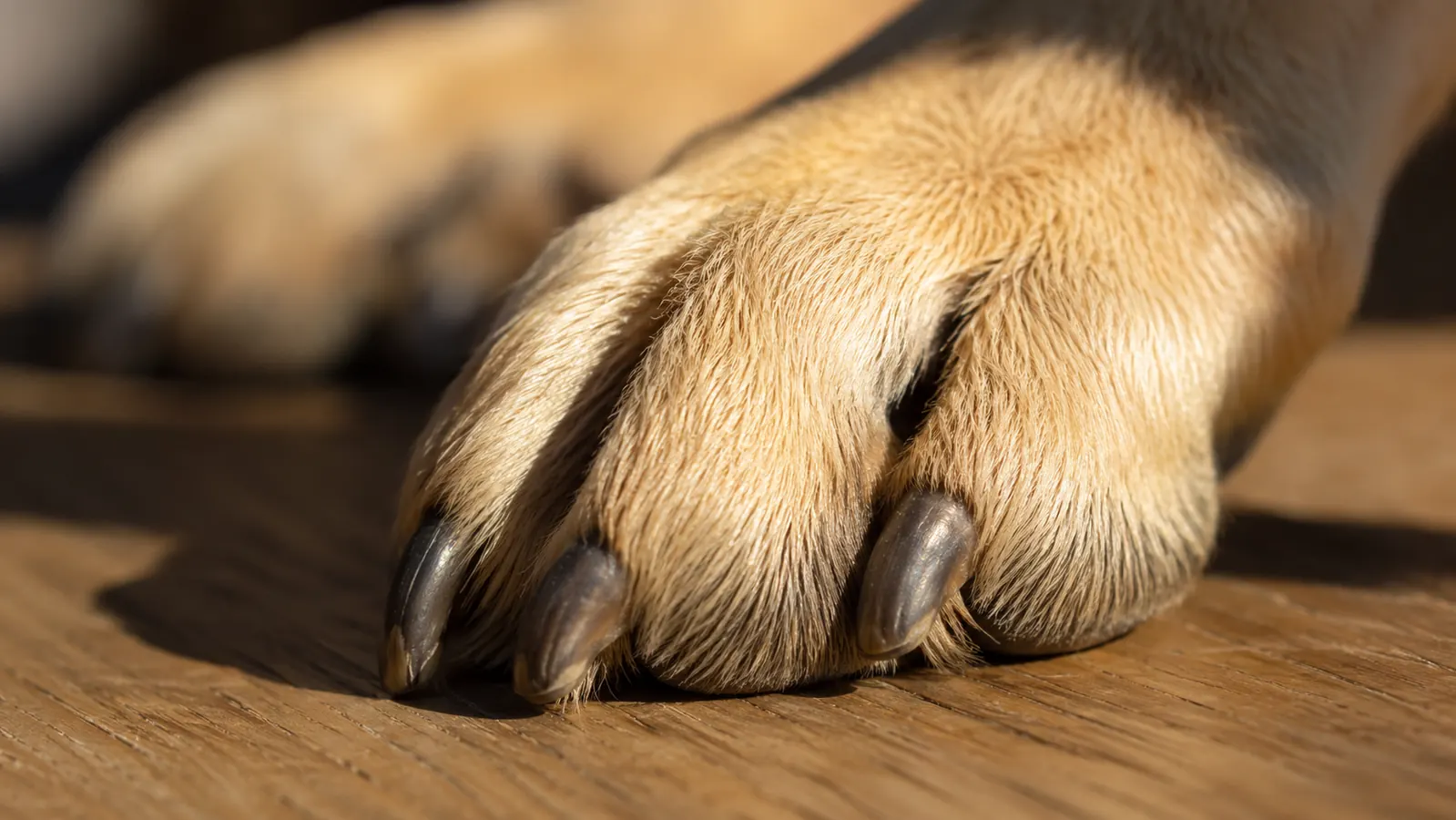
You cannot "cut" the quick with a grinder the way you can with a clipper. But you can grind into it, and when you do, it is an abrasion rather than a clean cut, which means it is actually slower to stop bleeding and more sensitive at the time of contact. On dogs with light-colored nails you can see the pink quick through the nail and stop well before you reach it. On Otis, who has black nails on all four feet, I rely on feel: as you approach the quick, the nail texture changes from chalky-dry to a slightly waxy, softer feel. That is your stop signal. Grind a little at a time, look at the cross-section of the nail tip under decent light, and stop when you see a dark circle or oval forming in the center of the trimmed surface. That circle is the outer wall of the quick, and you are close enough.
Penny has light-colored nails and is a much more forgiving test case. With Penny I can see the quick clearly and stop with a solid 2-3mm margin. With Otis the guesswork is real, and if you rush it, you will hit the quick eventually. The grinder being painless does not make quick exposure painless. Have styptic powder within reach regardless of which tool you use.
Battery Life: The Marketing Number vs the Real-World Number
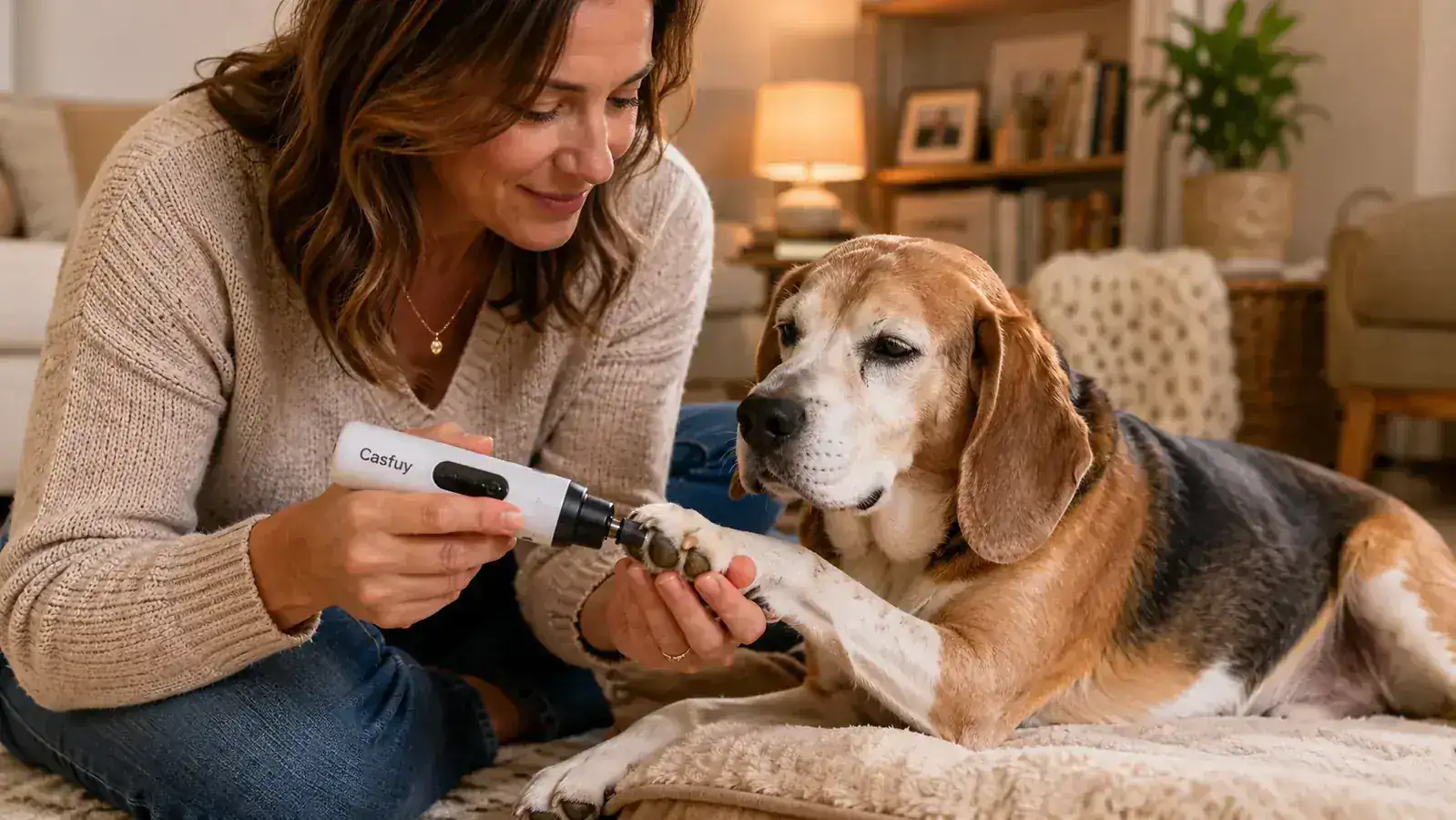
The Casfuy listing says up to 3 hours of use on a full charge. I want to be precise about what that number means. Three hours of runtime on the low-speed setting with no load on the drum is roughly what the battery can deliver. Three hours of actual nail grinding, with the drum in contact with nails, with bursts on high speed for thick nails, is not what you will get. In my experience with three animals back to back, I used about 30-35 minutes of active grind time and consumed roughly 40-45% of the battery charge.
That math still leaves plenty of headroom for a full grooming session with one or two animals. Where it matters is if you are grinding multiple pets or if you frequently forget to recharge between sessions and start with a partial charge. The Casfuy charges via USB-C, which I appreciate, but the charge time is about 2-2.5 hours for a dead battery, so you cannot quick-charge it mid-session the way you can with some newer tools. For most single-pet households the battery life is fine. For multi-pet households, especially if you also want to use it on a cat, develop the habit of charging it the night before your grooming day.
Cat Use: What I Learned Testing This on Miso
The Casfuy listing includes cats in the product name and shows cat photos in the listing images. So let me give you an actual cat-owner perspective. The grinding ports include a smaller opening sized for cat claws, and mechanically the tool does work on cat nails. Cat nails are thinner, harder relative to their diameter, and grow faster than dog nails, but they respond to the grinding drum fine at low speed.
The challenge with cats is not the grinder, it is the cat. Miso allowed me to grind two front paws across three sessions spaced a week apart, and I would call that a partial success. Her rear paws, which she is already protective about, were a non-starter with the grinder in the picture. If your cat is already tolerant of nail clippers and paw handling, this grinder is a reasonable upgrade. If your cat is a "this is torture and I hate you" reactor to clippers, the grinder is not going to be easier; it is just a different thing she hates. Cats respond to consistency and very short sessions, 30 seconds maximum when you are starting, so budget for a 4-6 week desensitization window before you can get through all four paws in one sitting.
What I Liked
- Genuinely quieter than a Dremel at comparable speeds, meaningful for noise-sensitive dogs
- Two speeds give you real control over the approach for different nail thicknesses and temperaments
- USB-C charging is convenient; no proprietary cable to lose
- Small, lightweight form factor is easy to maneuver on senior dogs who shift position frequently
- Grinding drum and replacement bands are widely available and inexpensive
- Mechanically works on cats, even if cat cooperation is the harder variable
Where It Falls Short
- "Whisper-quiet" is relative; reactive or sound-sensitive dogs may still need extended desensitization
- No heat management reminder; the drum warms up with continuous contact and the manual does not warn you clearly enough
- Battery life is rated for unloaded operation; heavy use across multiple animals will consume charge faster than the spec suggests
- High-speed setting is genuinely loud and most owners do not need it except for very thick nails
- Grinding port openings have no depth stop, so technique matters more than it does with a clipper guard
- Cat use requires pre-existing paw tolerance from the cat; not a fix for clipper-averse cats
Who This Is For
The Casfuy grinder is the right tool if you have a dog who has had a bad experience with clippers (either the owner nicked the quick or a groomer was rough) and who is not already severely noise-phobic. It is also a good fit if you want to smooth rough nail edges after a clipper cut, which is something I do with both Otis and Penny: one or two seconds of grinding after clipping removes the sharp edge that catches on fabric. If you have a cat who is relaxed about grooming in general, it is worth trying with patient introduction. And it is a strong pick for anyone who is new to home nail maintenance and wants more margin for error than clippers provide.

Who Should Skip It
If your dog is genuinely noise-phobic, with reactivity that extends to distant sounds like appliances, vehicles, or thunder, start with professional desensitization before you introduce any powered grooming tool. The Casfuy is quieter than many alternatives, but it is not silent, and rushing a noise-phobic dog into grooming contact with a buzzing tool sets back the process significantly. Similarly, if your dog is very large with extremely thick nails (I am thinking Rottweilers, Great Pyrenees, giant breeds with correspondingly dense nail structure), the Casfuy motor can feel underpowered on high speed and will run warmer. It is not a dangerous limitation, just a slower experience that can frustrate both you and the dog. For those cases, a corded Dremel with a nail grinding attachment is more appropriate. And if you were hoping to use this as a cat-only tool for a cat who does not already accept paw handling, you will likely give up before the cat cooperates.
Ready to try it? Over 100,000 owners have, and most stick with it once the first few sessions are behind them
The Casfuy nail grinder is one of the most-reviewed pet tools on Amazon for a reason. Check today's price and read through the Q&A section for answers to the common technique questions.
Amazon Check Today's Price on Amazon →