
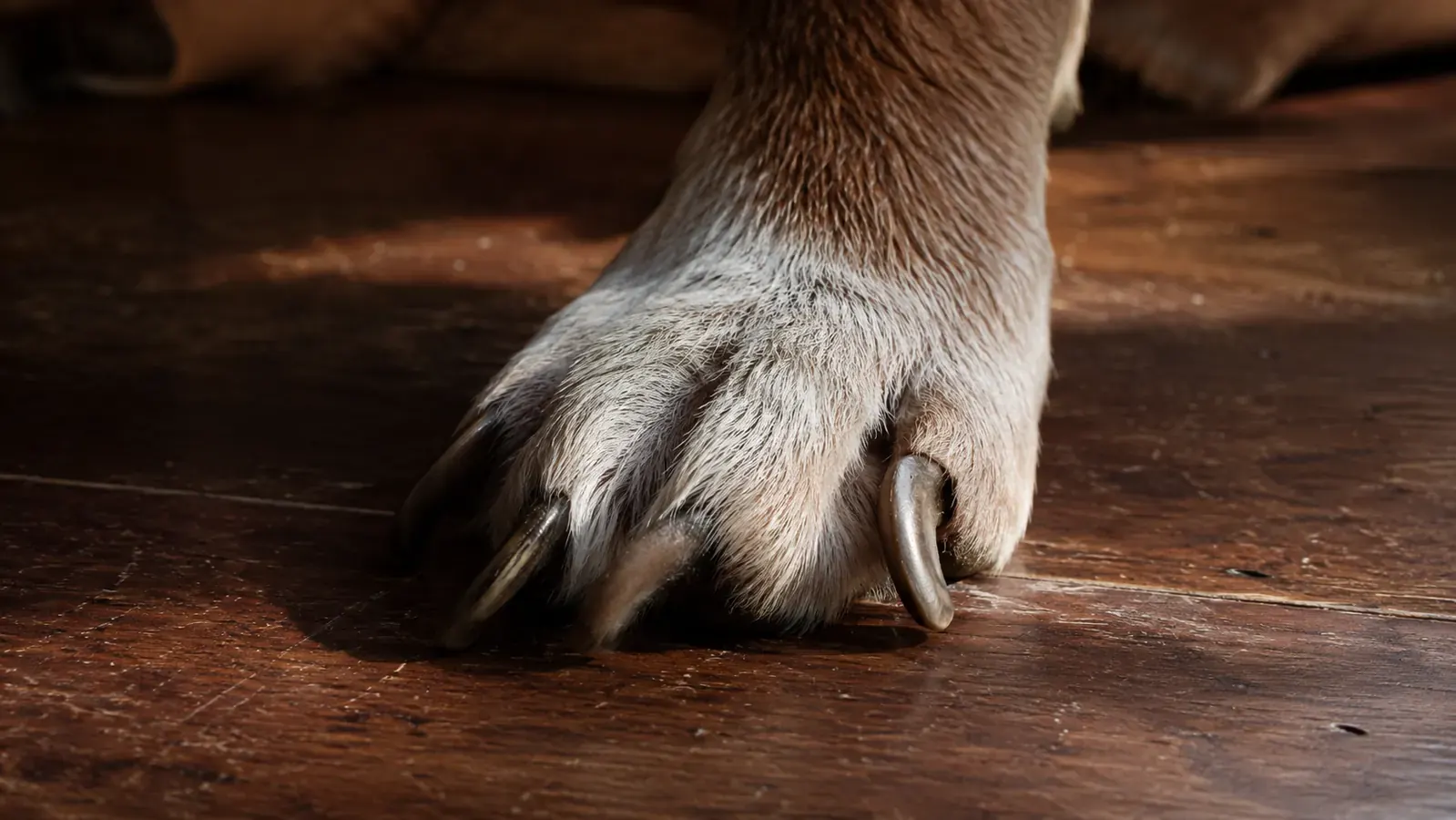
Most people keep using clippers long after clippers have stopped working for their dog. The signs are obvious once you know what to look for: nails clicking on every hard floor, a dog that reads the room and disappears the second you pull out the clipper case, or that sick feeling after you accidentally quicked a nail and saw blood. A nail grinder does not replace skill or patience, but it removes the biggest risks that come with clippers and gives you far more control over the result. After years working as a vet tech and now doing this at home with Otis and Penny, I have learned that most dogs who hate nail trims do not hate nail care itself. They hate the sudden pressure and snap of a clipper. Grinding is gradual and the dog can actually tolerate it.
Below are the 10 clearest signs that your dog is telling you the clipper is the wrong tool. The Casfuy Dog Nail Grinder is the one I use with both of my dogs, and it is what I recommend for most home owners making this switch. It has two speeds, runs quiet enough that even Otis tolerates it, and costs a fraction of a groomer visit.
If any of these signs sound familiar, a quiet nail grinder is the fastest fix.
The Casfuy grinder has over 100,000 reviews, two speed settings, and a whisper-quiet motor that most anxious dogs adapt to quickly. It is the tool that finally made nail trims manageable at my house.
Amazon Check Today's Price on Amazon →You Can Hear Your Dog Walking Across the Floor
If nails click or tap on hardwood, tile, or laminate with every step, they are too long. Nails should not make contact with the floor when a dog is standing normally. When they do, the pressure pushes back against the toe joints with every stride, which over time can alter a dog's gait and stress the wrist joints. A clipper takes off length in one snap, but a nail grinder lets you remove a small amount at a time and stop the instant you are close to the quick, so you do not overshoot. The Casfuy grinder's low-speed setting is ideal here: slow progress, no sudden jumps.
Your Dog Snags on Carpet or Fabric
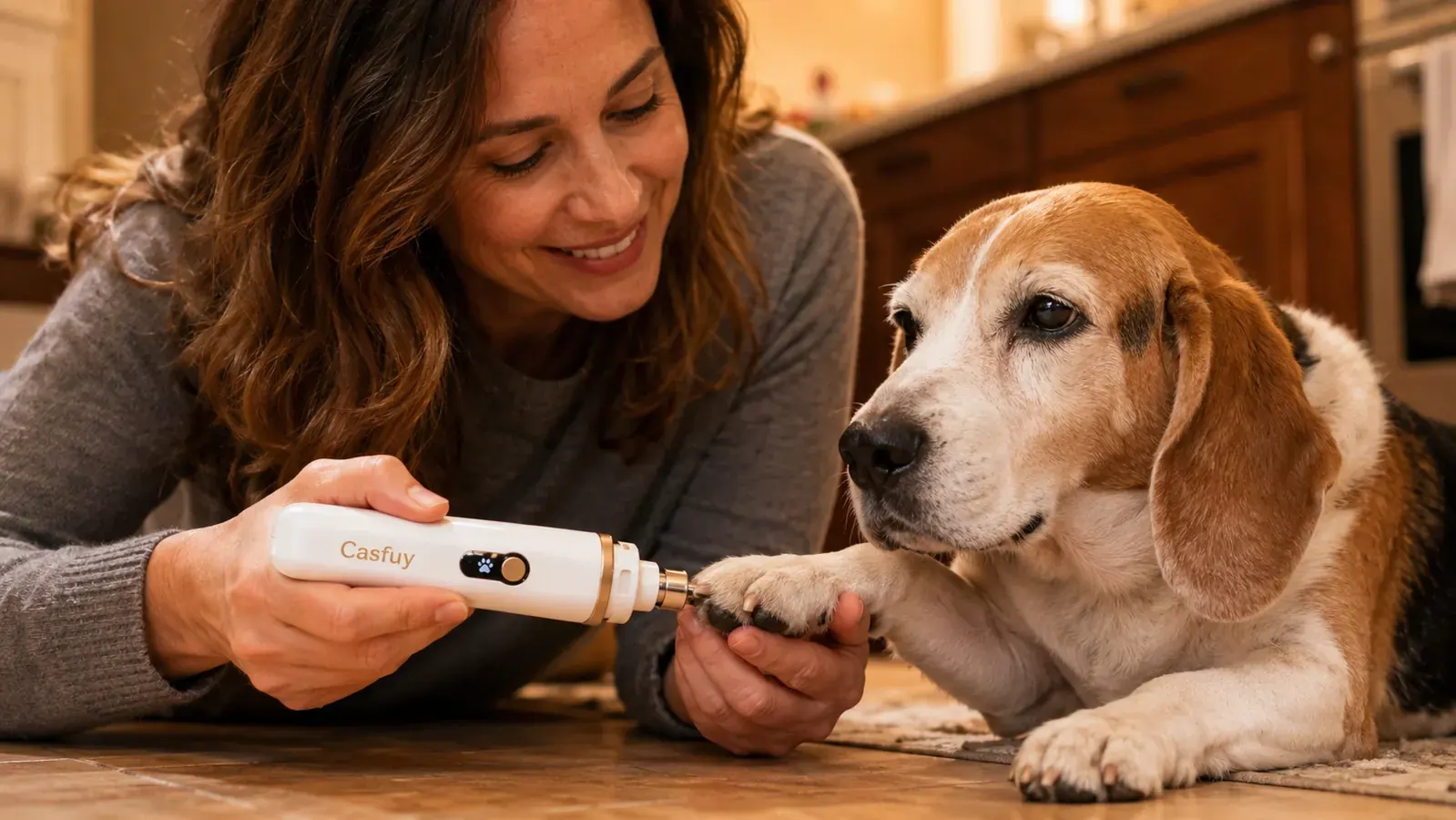
A nail that catches on a throw rug or sofa fabric is a nail with a jagged or hooked tip. Clippers leave a flat cut edge that can split and catch. A nail grinder smooths and rounds the tip so there is nothing to hook. If you notice your dog briefly stuck mid-step on carpet, or pulling at blankets with their paws, check the nail edges. Grinding for 10 to 15 seconds per nail after a clipper trim, or grinding instead of clipping entirely, eliminates the snagging problem.
You Have Accidentally Quicked Your Dog Before
Cutting the quick is the most common reason dogs develop long-term fear of nail trims. The quick bleeds, it hurts, and the dog remembers. A nail grinder does not eliminate the quick, but because you are removing material gradually and the nail heats up slightly as you work, you can feel and hear the change in texture before you get close enough to cause pain. Most experienced grinder users stop well before the quick. If you have a history of quicking accidents with clippers, switching to a grinder is the most effective single change you can make.
Your Dog Panics Before You Even Touch Their Paw
Some dogs have been conditioned to fear nail trims so thoroughly that they start to stress the moment they see the clipper case. If your dog trembles, hides, or goes stiff when they recognize the pre-trim routine, the clipper itself has become the trigger. Switching tools breaks that association. Introduce a nail grinder powered off first, pair it with treats for several sessions, then introduce the vibration gradually. The Casfuy runs quiet enough that most dogs habituate faster than they would to a louder rotary tool, which makes the desensitization process more manageable.
Your Dog Has Black or Dark-Colored Nails
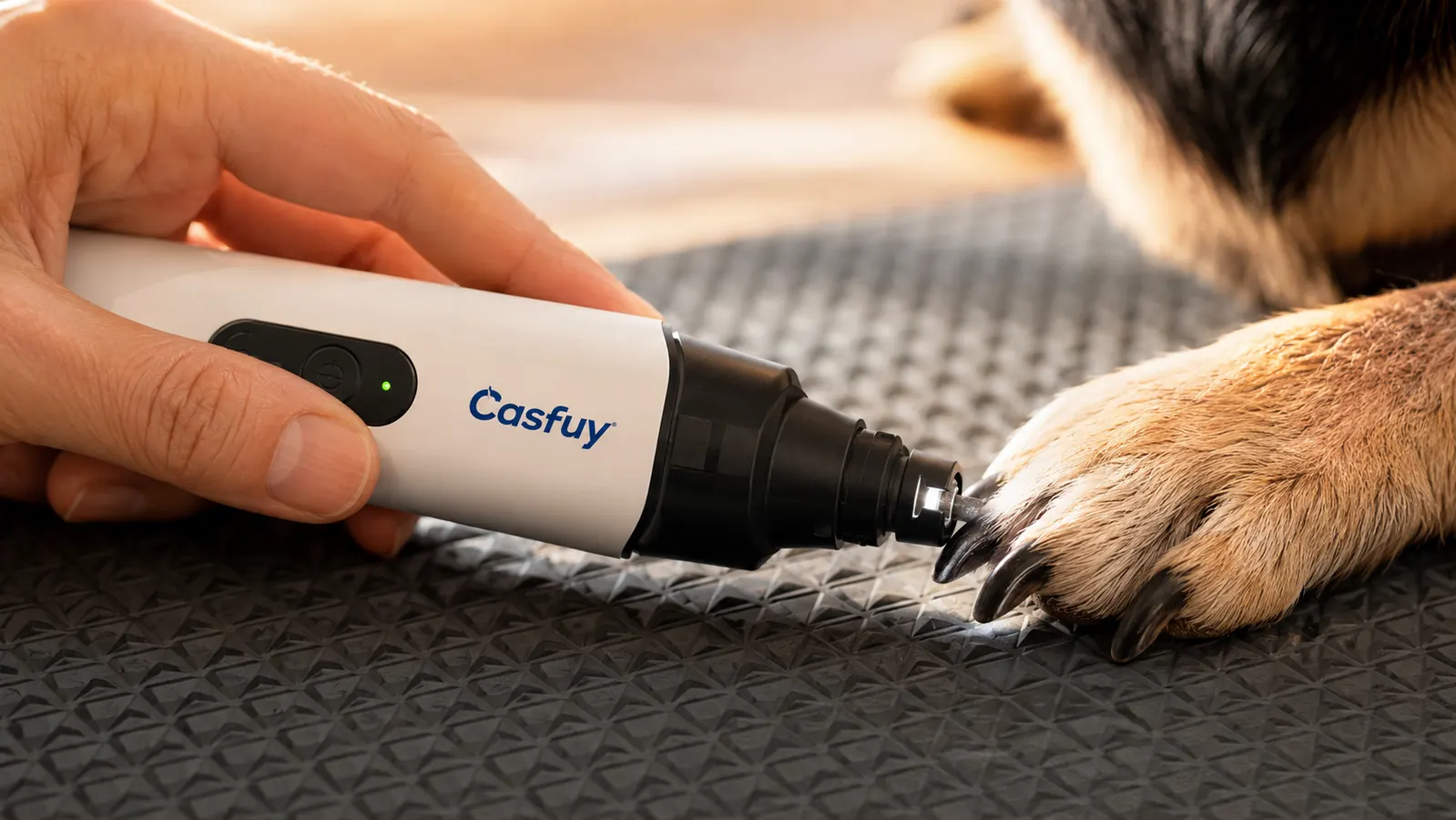
Dark nails are the reason many owners give up on at-home nail trims entirely. The quick is invisible in a black nail, so every clip is a guess. A grinder does not make the quick visible, but it changes the stakes. You are removing a tiny amount of nail with each pass, and the chalky white circle that appears at the center of the nail as you get close is your warning sign to stop. It is much harder to overshoot with a grinder than with a clipper. For dogs with even a few dark nails, this alone is reason enough to make the switch.
The Nails Are Splitting or Cracking Instead of Cutting Clean
A clipper that is dull, misaligned, or the wrong size for the nail will crush the nail before it cuts, causing splits that run vertically toward the quick. A split nail is painful, prone to infection, and will catch on everything. If you have noticed your dog's nails splintering rather than cutting cleanly, the clipper mechanism is creating damage before the cut is even finished. A nail grinder bypasses this entirely because it removes material by abrasion rather than compression. You cannot split a nail by grinding it.
Your Dog Is a Large Breed With Thick Nails
Standard nail clippers are designed for an average nail diameter. Large and giant breeds often have nails that exceed what a standard clipper can handle cleanly. Even heavy-duty clippers require significant force, and if you are not physically strong, or if your grip is off, the cut compresses rather than shears. Nail grinding handles nail thickness more consistently because the abrasive drum does not care about diameter. The Casfuy's high-speed setting works well on thick nails without overheating the nail tip, and the sapphire bit included in the kit is more durable than a standard stone for harder nails.
Your Dog Has a Dewclaw That Has Started Curling
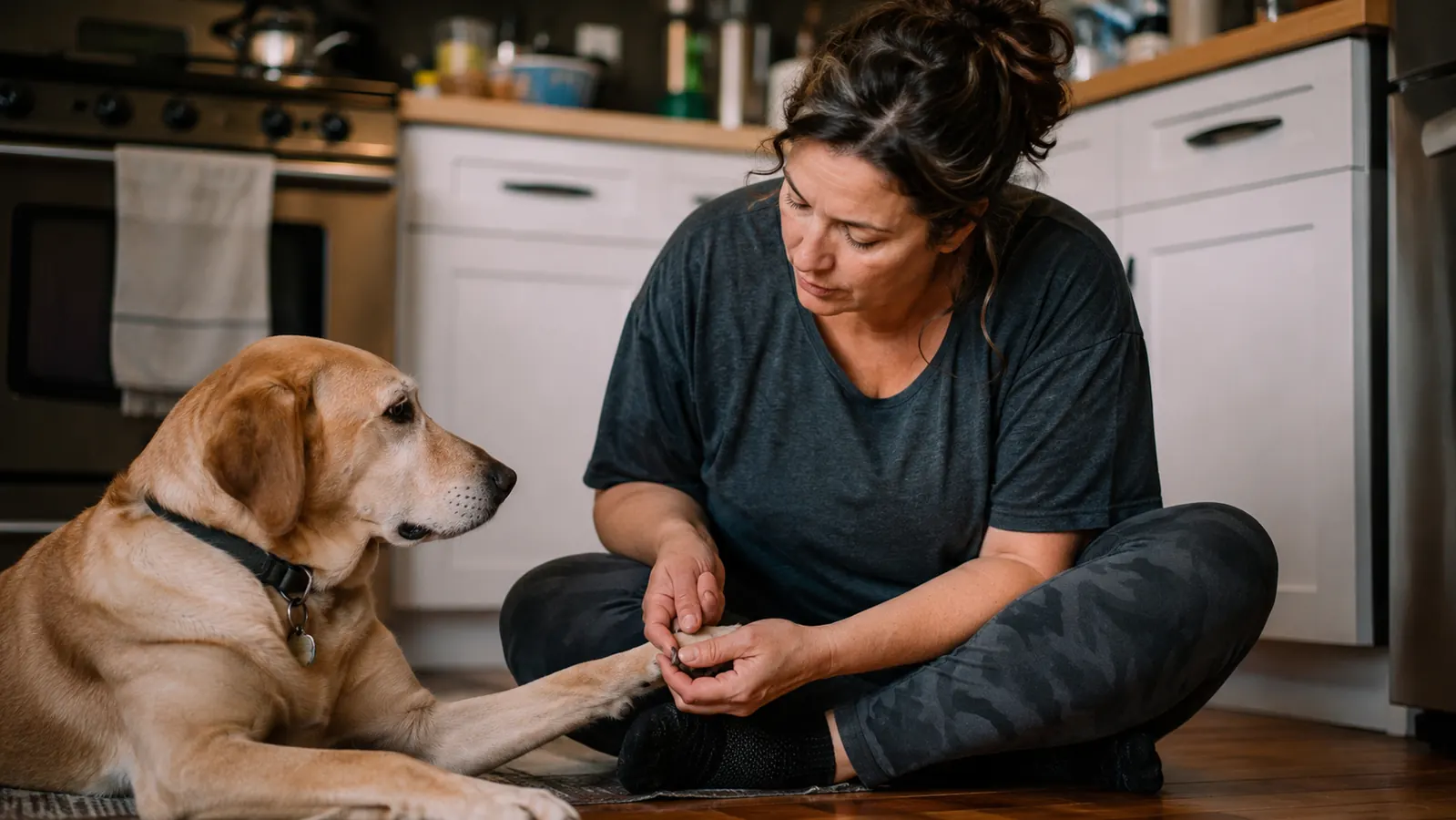
Dewclaws do not wear down naturally because they never touch the ground. They are easy to forget and the most common nail on a dog to become dangerously overgrown. A curling dewclaw can grow back into the skin of the leg, which causes significant pain and often requires a vet visit to address. Reaching a dewclaw with clippers at the right angle is awkward. A nail grinder's smaller drum tip makes it easier to get into that tight position without torquing the dog's leg. If you have been avoiding the dewclaw, a grinder makes it more accessible.
Your Senior Dog Tolerates Less and Less Each Session
Older dogs have less tolerance for the physical stress of nail trims. Joints are stiffer, the quick has often receded deeper into older nails making clipping safer, but the snap of a clipper can still startle a dog that is already on edge. Otis is 12 now and arthritic. I switched to the Casfuy grinder about a year ago and our sessions are shorter and calmer because I can do one nail at a time, stop for a break, and continue without resetting the whole routine. The vibration of a grinder is actually easier on old joints than the abrupt force of a clip.
You Are Paying a Groomer Just for Nail Trims
A standalone nail trim at a groomer typically costs between $10 and $20, and most groomers recommend it every four to six weeks. If you are making those trips because you do not trust yourself with clippers, a nail grinder is the tool that can close that gap. The learning curve is lower because the margin for error is wider. After a few sessions with a grinder, most owners feel confident enough to handle nail care at home between groomer visits, if not entirely on their own. The Casfuy pays for itself after two or three groomer trips avoided.
What I'd Skip
Skip any grinder with a single fixed speed, no guard ports, and a motor that runs loud enough to be heard clearly across a room. Those models are usually cheap in both price and build quality, and they are the reason some people try a grinder once and give up. They overheat faster, the abrasive drums wear down quickly, and the noise is enough to keep an anxious dog anxious. Also skip trying to grind all four paws in one session the first time. Even a dog that handles the tool well will get more comfortable if the first few sessions are short, low-stakes, and end with something good.
The snap of a clipper startles. The hum of a grinder habituates. Most dogs who have written off nail trims entirely can learn to sit still for a grinder if you introduce it without rushing.
The Casfuy is the grinder I trust on my own dogs. It runs quiet, handles thick nails, and has never overheated on me.
Over 100,000 pet owners have rated it 4.4 stars. Two speed settings, a whisper-quiet motor, and a price that makes it easy to try. If any of the 10 signs above sound like your dog, this is the place to start.
Amazon Check Today's Price on Amazon →